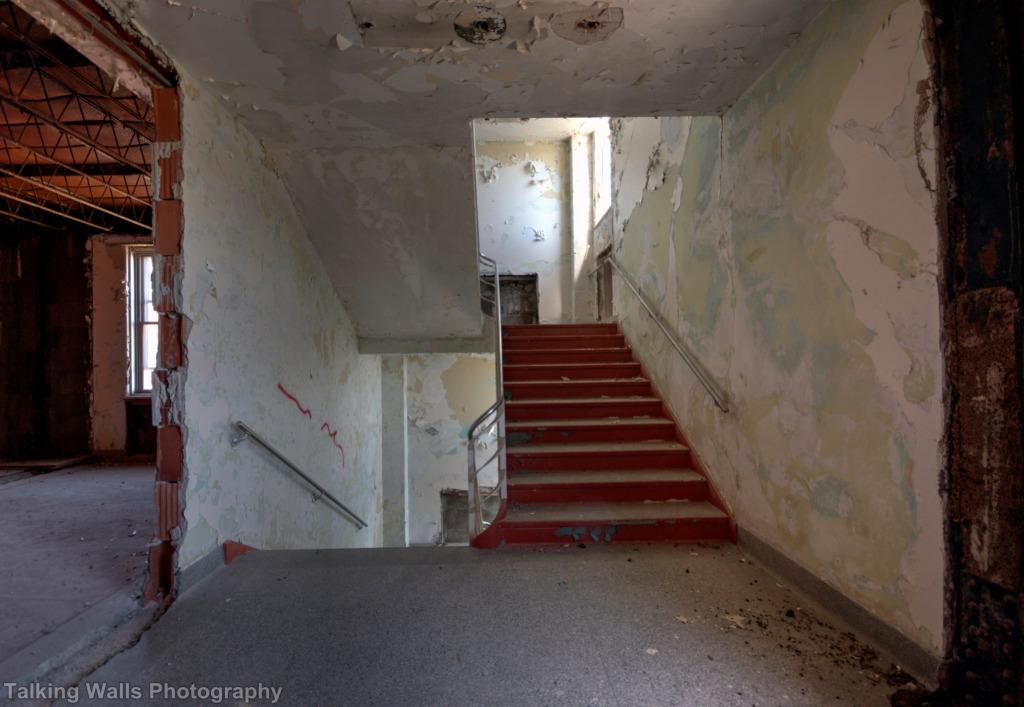
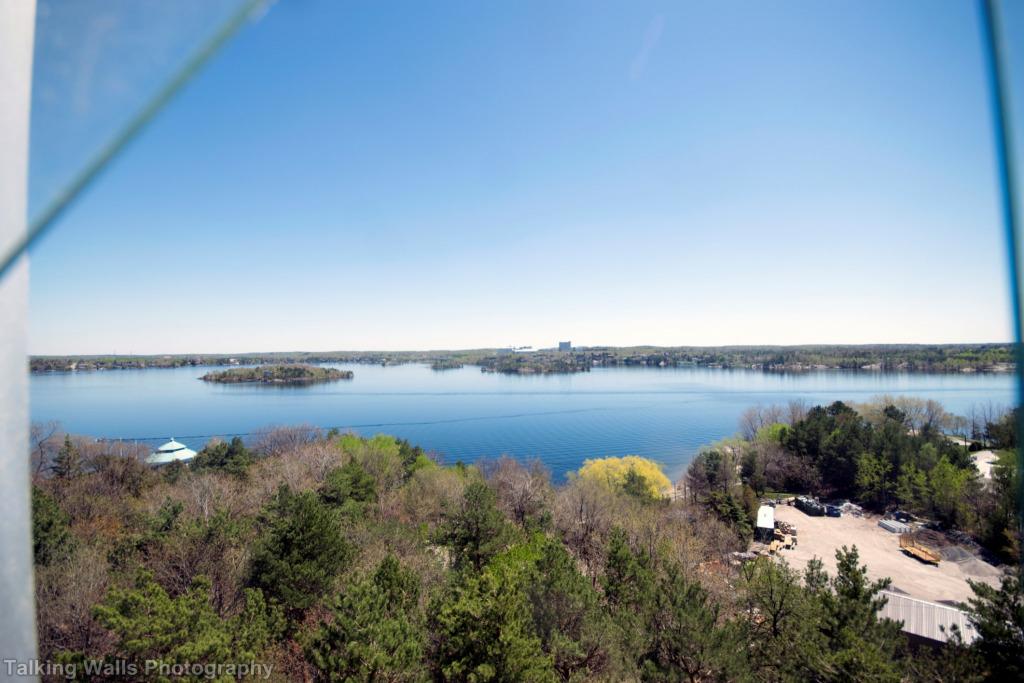
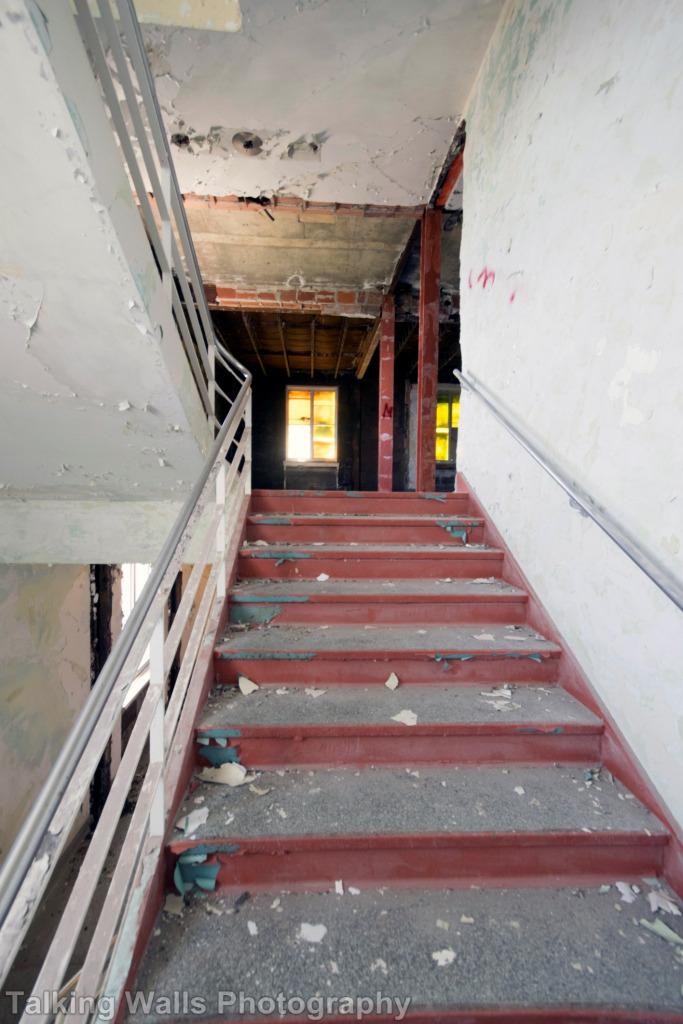
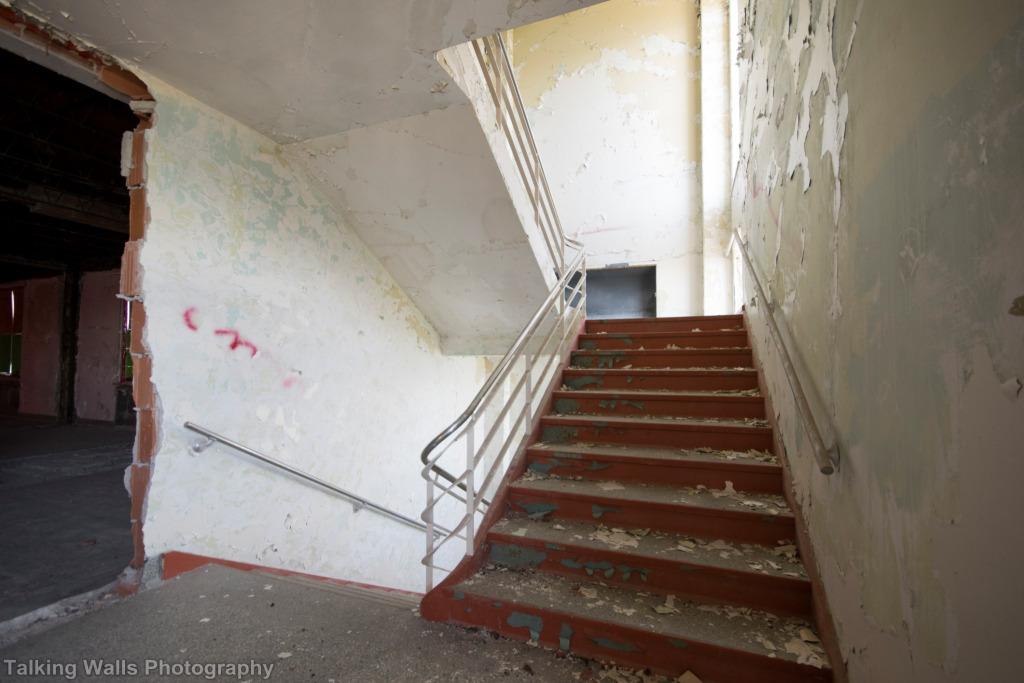
Category: Hospitals

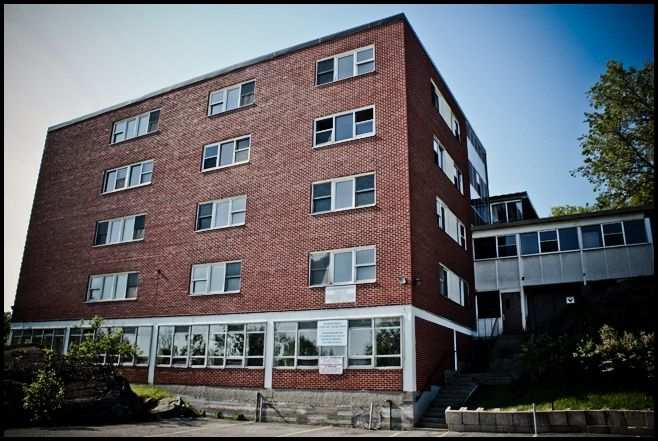
Vaughan Glen Hospital – The Original Sick Kids Hospital

In May of 1899, a group of twenty-two women sat down for tea and formed a committee dedicated to helping sick childeren. The women formed the Home for Incurable Children. Eighteen of the women would become founding members of The Hospital for Sick Children.

The Home’s mission statement was, “to receive and tenderly care for children of either sex, between the ages of 2 and 16 years, afflicted with any incurable disease.” Two years later the mission statement was amended to exclude “those merely blind, deaf or dumb; those suffering from epilepsy; those imbecile or idiotic; those suffering from pulmonary tubercolosis.”

In November, a house located at 138 Avenue Road was donated to the women, rent-free for two years. The public assisted with donations of furniture. A “Lady Superintendent” was hired on a salary of $15 per month.

On November 29, 1899 the first patient was admitted although the formal opening took place on December 16, 1899. There were accomodations for fifteen children. Area doctors were invited to join the staff as “Visiting Physicians” for which they were not paid.

By 1907 there was a need for more accomodation due to increase in demand for services. A property located at 152 Bloor Street East was purchased which was capable of handling 26 children. The home demanded tight budgeting and the generosity of other people to pay the bills.

Children were given the opprotunity to advance their education while staying at the home. In 1912 the Toronto School Board appointed a teacher to work with the children for 2 hours per day. In 1921 full day classes were funded. The mornings were spend on academic learning and the afternoons were spent working on crafts.

The provincial government provded a 50 cent per day/per child grant.

In 1931 with road widening taking place, the home moved from 152 Bloor Street to 278 Bloor Street East. This was also the same year that the nurses residence was constructed which allowed staff to live on site.

1950’s Expansion

Thanks to a bequest by Mrs. Emma Vincent Campbell, the home was able to expand. On October 23, 1952 the Emma Vincent Campbell wing opened. The new wing allowed 45 children to be cared for.  The main building was renovated to allow for occupational, physical and speech therapies to be taught.

By 1956 a senior classroom and rumpus room (recreation) were built. There were now 40 patients, 54 staff and 60 volunteers. There were 28 board members, and 33 members of the Sewing Auxiliary. More physicians were being appointed to assist in areas such as Orthopedics, Genito-Urinary, General Surgery, Plastic Surgery and Dermatology.

In 1959 under pressure from the public, the home’s name was changed to “Bloorview Hospital, Home and School.” The same year a psychiatrist and psychologist were hired.

More Growth

In 1969 there were 52 children in the Bloorview Hospital. The board began searching for a new location to expand. They purchased land near Sheppard and Leslie. Construction on the new hospital began in August of 1973. The new hospital opened in 1975 and boasted a 12-bed infant unit, a unit for adolescents and young adults, and education up to secondary school entry-level inside the 10-classroom Bloorview School adjoined to the facility.

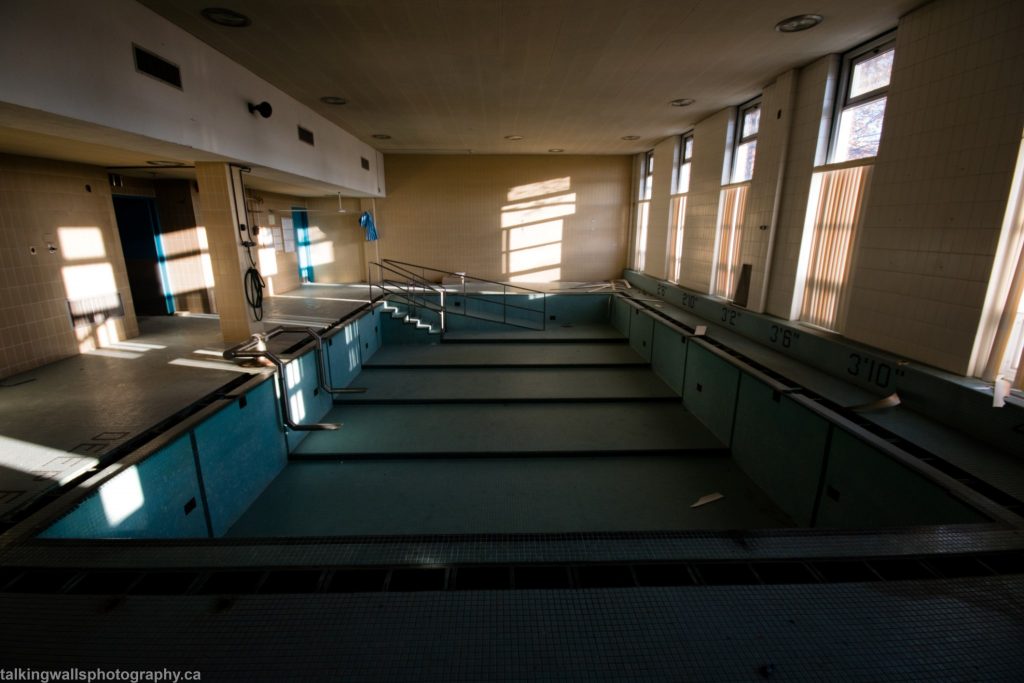
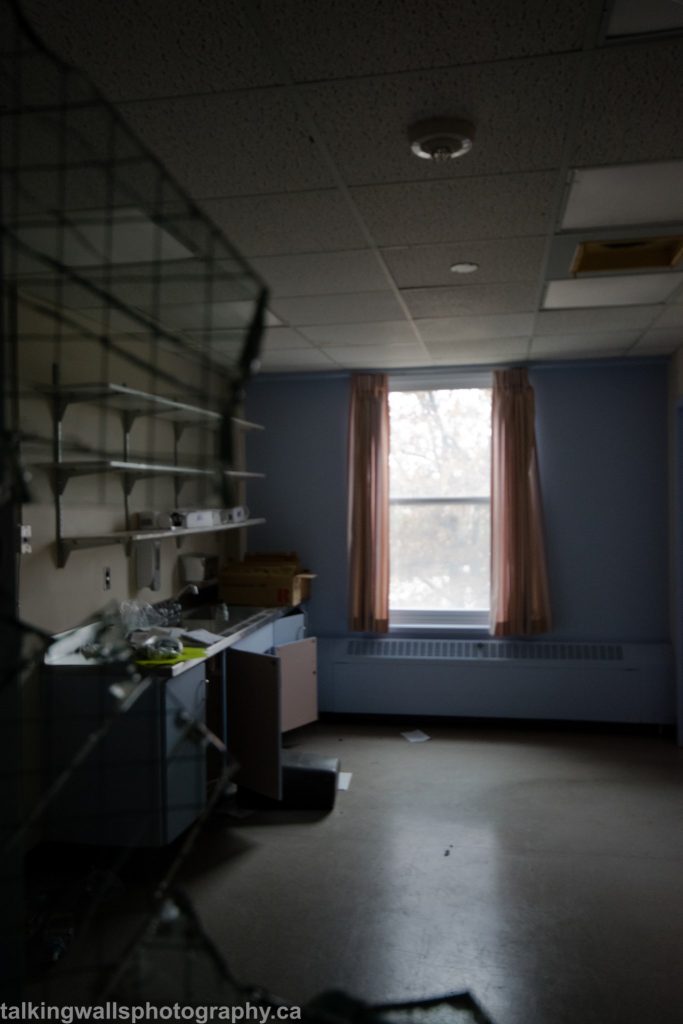
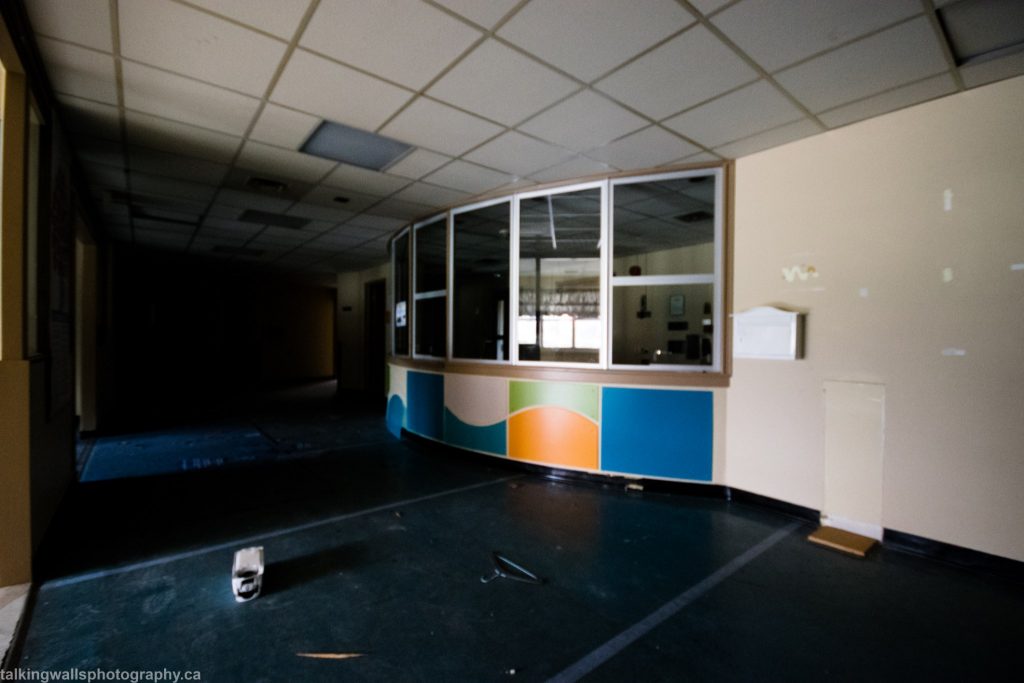
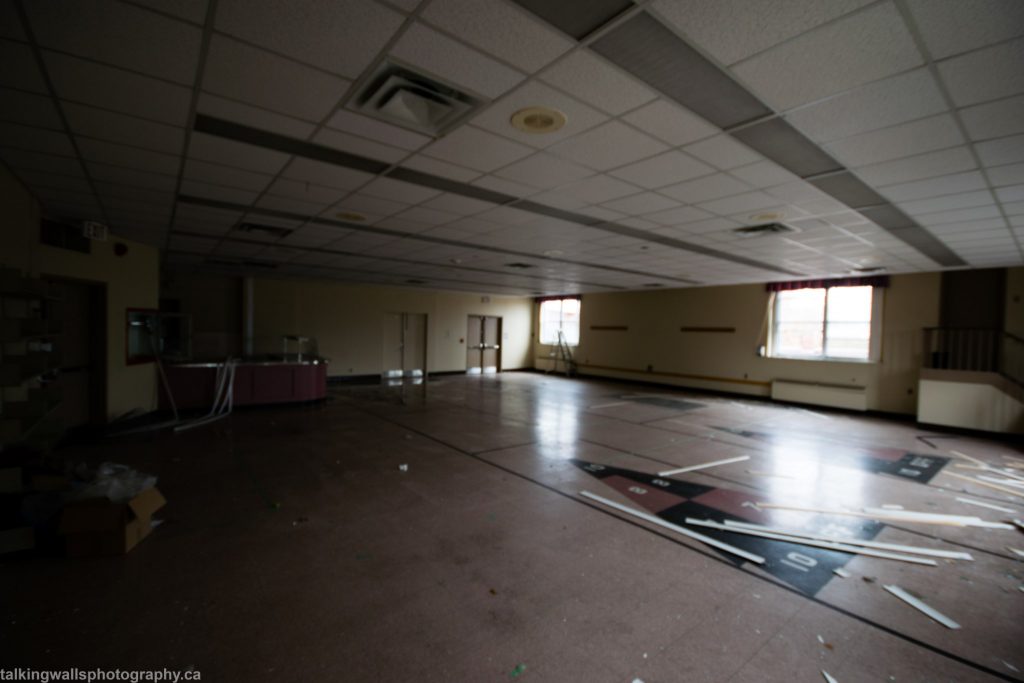
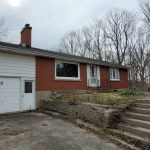
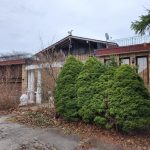
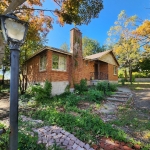
On March 31, 1987 with funding from the government, the hospital board purchased the Villa Private Hospital which was later renamed to Vaughan Glen Hospital. The property was used for children in care who were too old to reside at Bloorview Kids Rehab. Several of the children were later transitioned into group homes.

Present Day

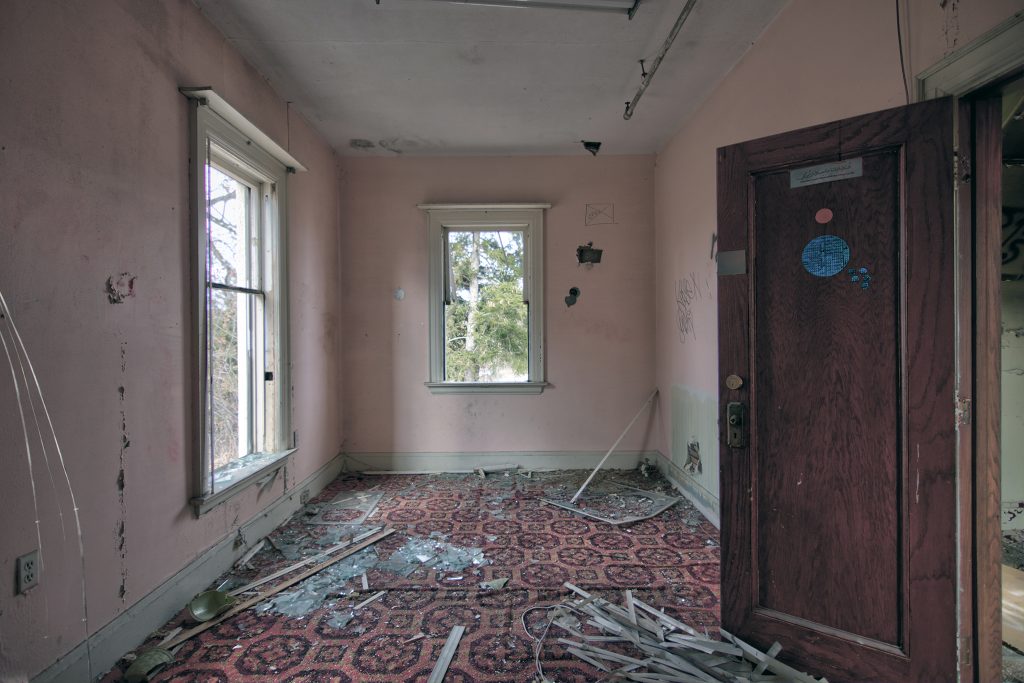
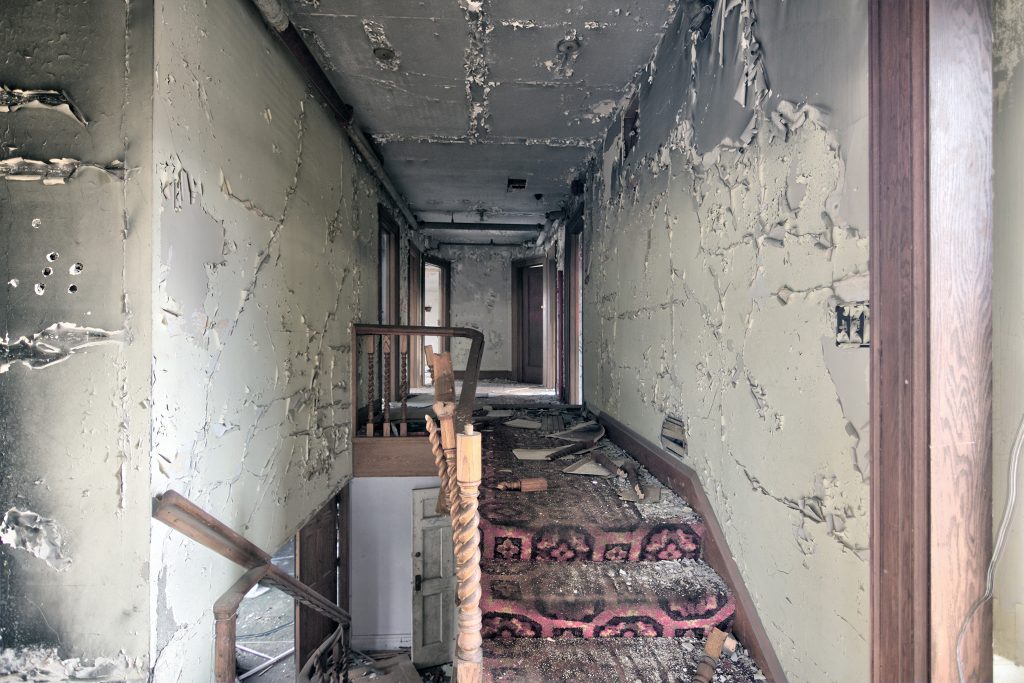
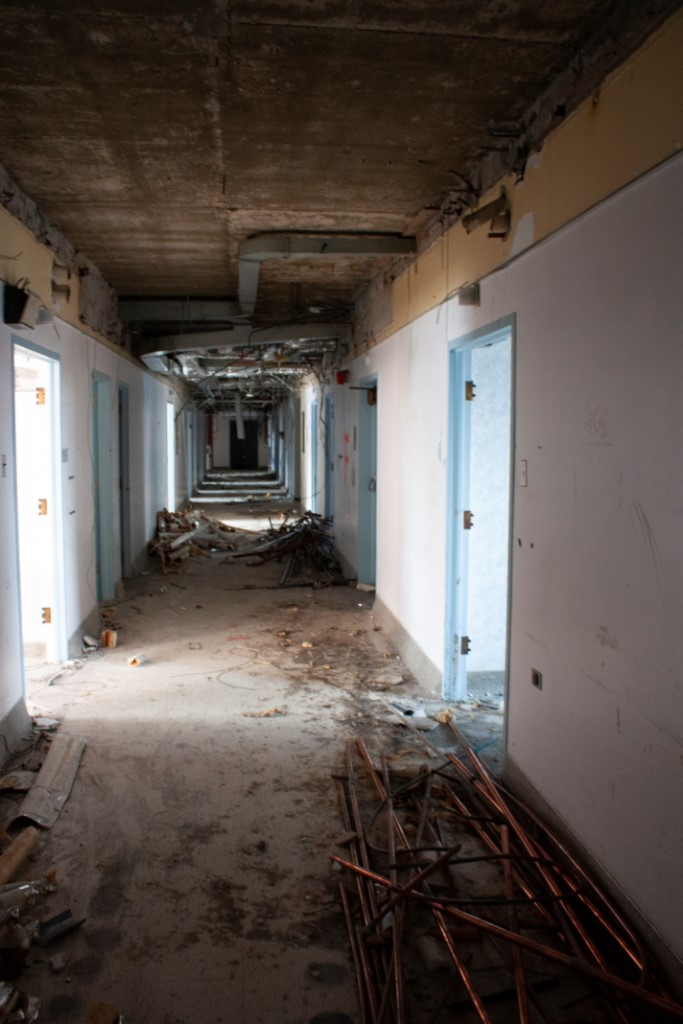
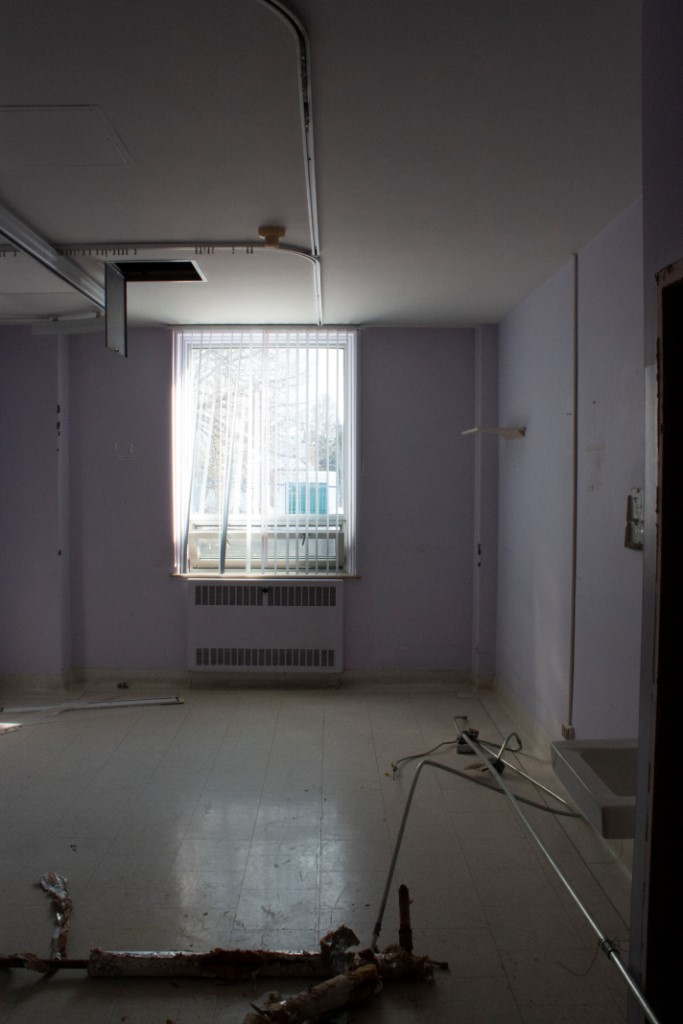
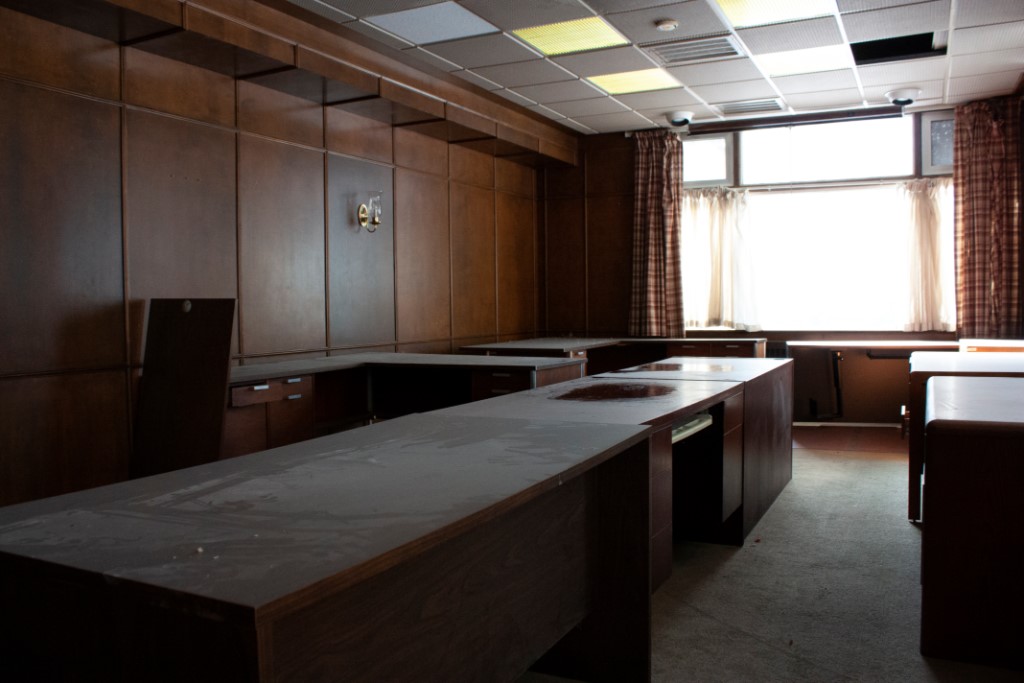
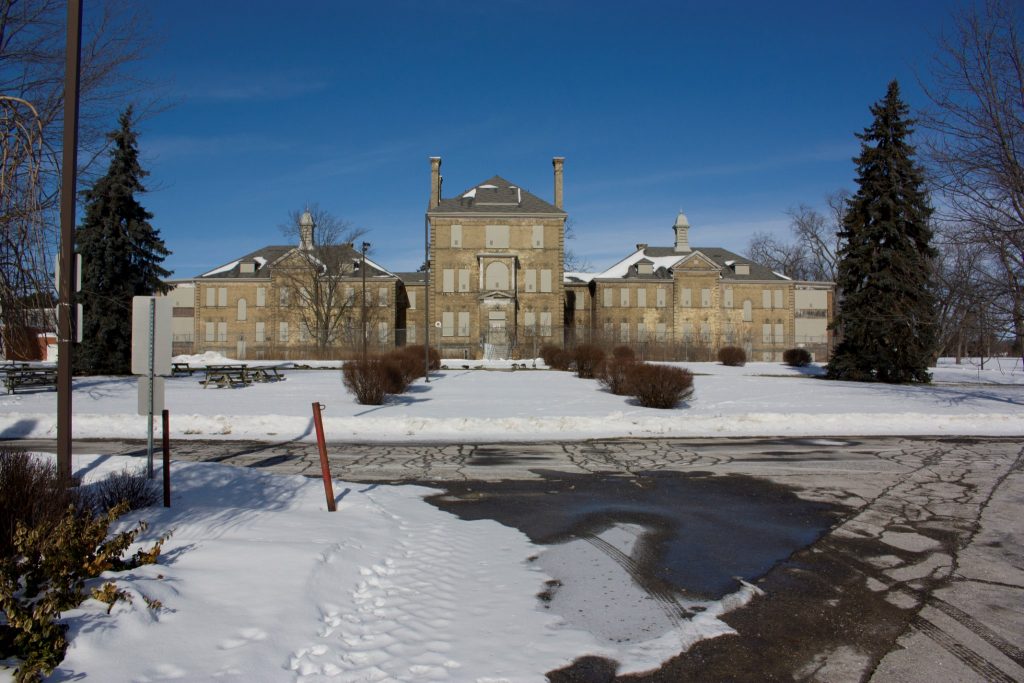
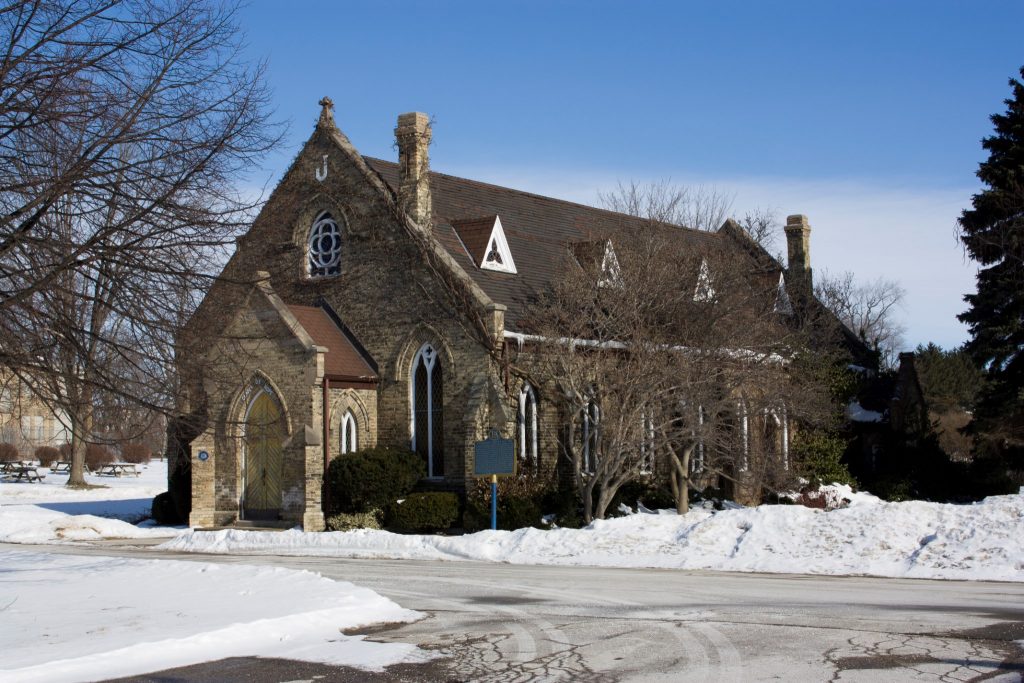
The hospital closed in 1994, and the property sold to the Islamic Shia Ithna-Asheri Jamaat of Toronto. The building was added to Vaughan’s “Listing of Building of Architectural and Historical Value” in 2005. In 2012, the Heritage Vaughan Committee recommended the structure be preserved. Vaughan City council passed the motion.

In 2017, the Heritage Vaughan Committee recommended that city council approve a motion to relocate the building.

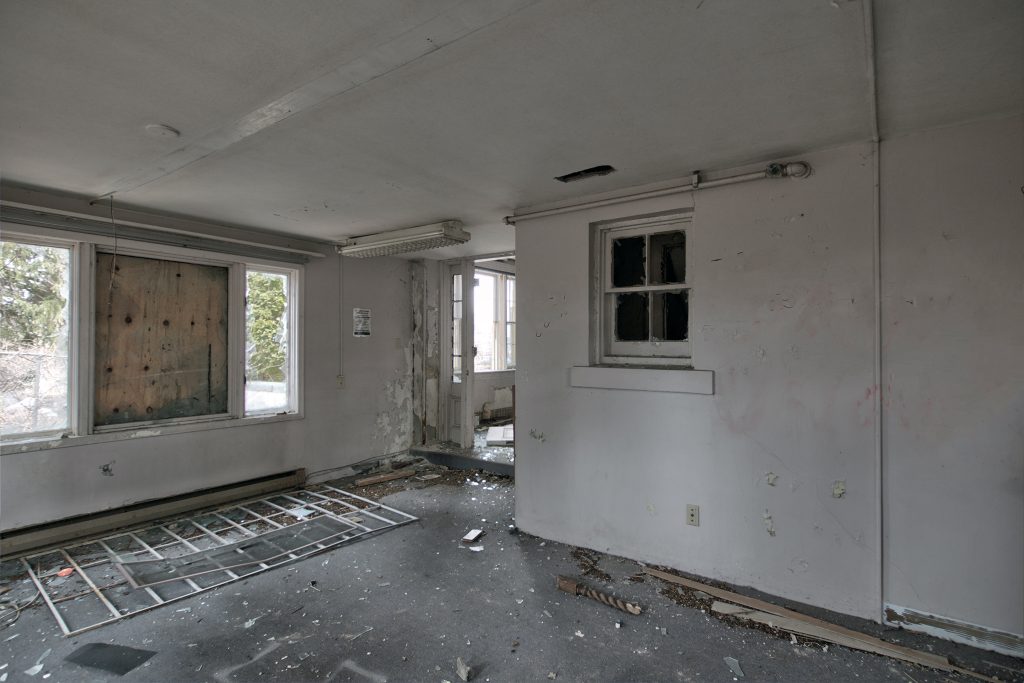
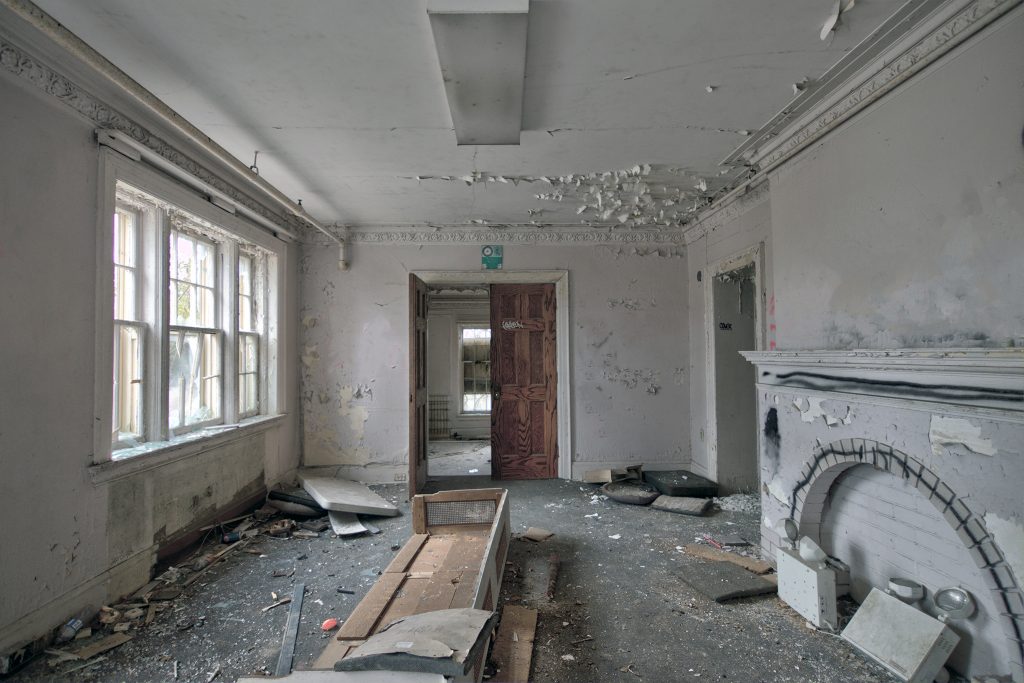
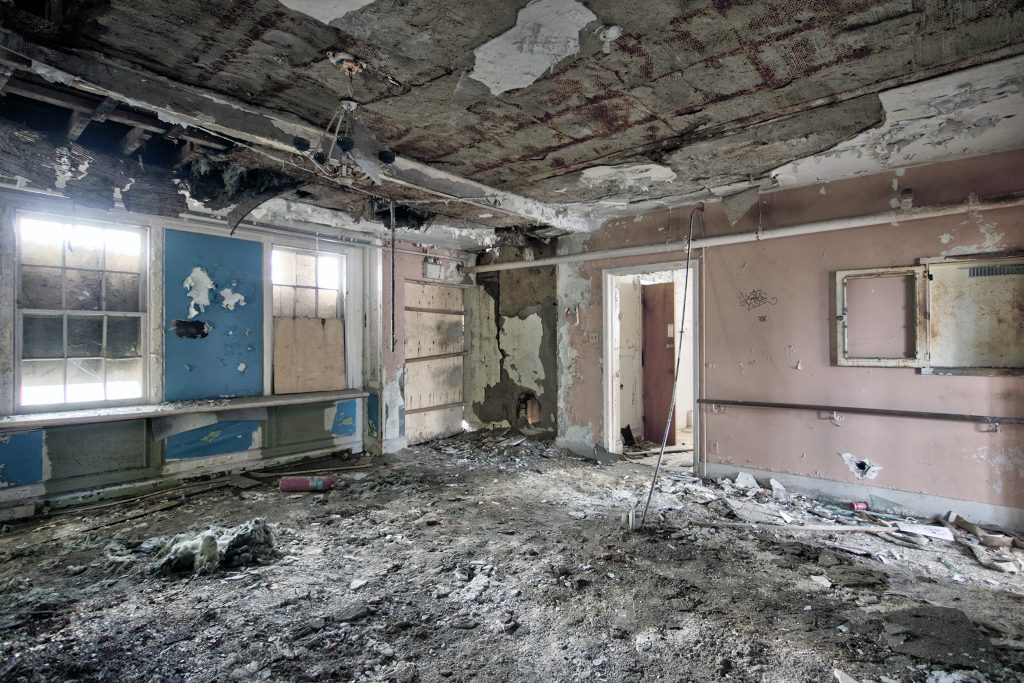
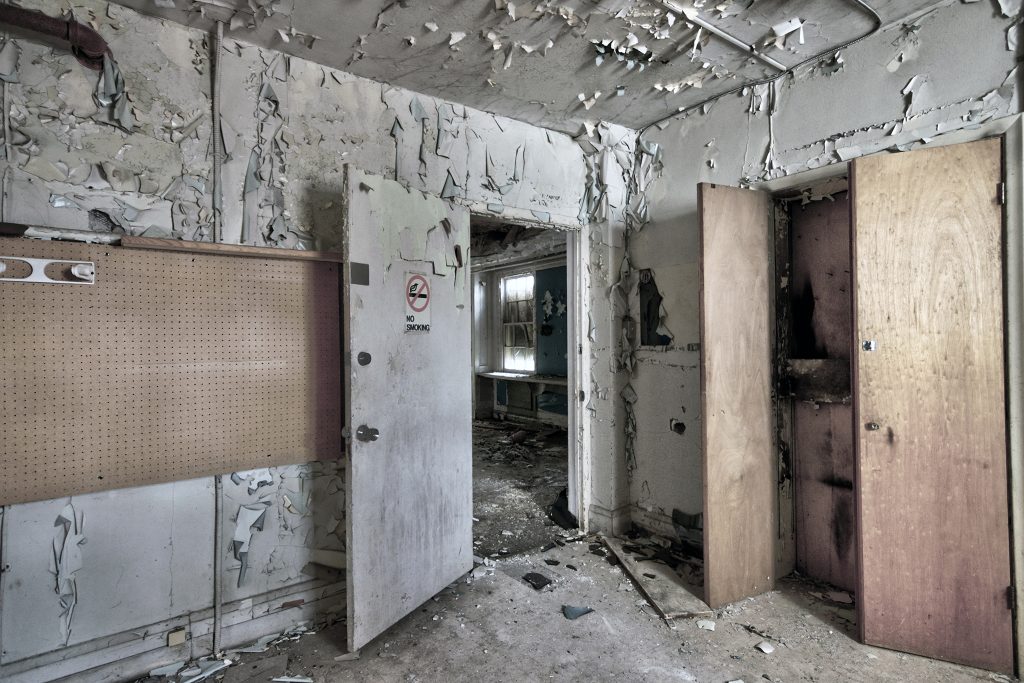
The Islamic Shia Ithna Asheri Jamaat (ISIJ) wants permission to rezone and develop the property around the Jaffari Community Centre mosque. They were seeking to build two 17-storey towers on the property. After holding over 28 meetings with the public, the proposal was reduced to one eight-storey tower and a six-storey tower, along with a school, 60-townhouse complex and parking structure. ISIJ have owned the property since 1994. Despite the community’s petitioning for the building to be saved, the owners seem content to let it become demolition by neglect.

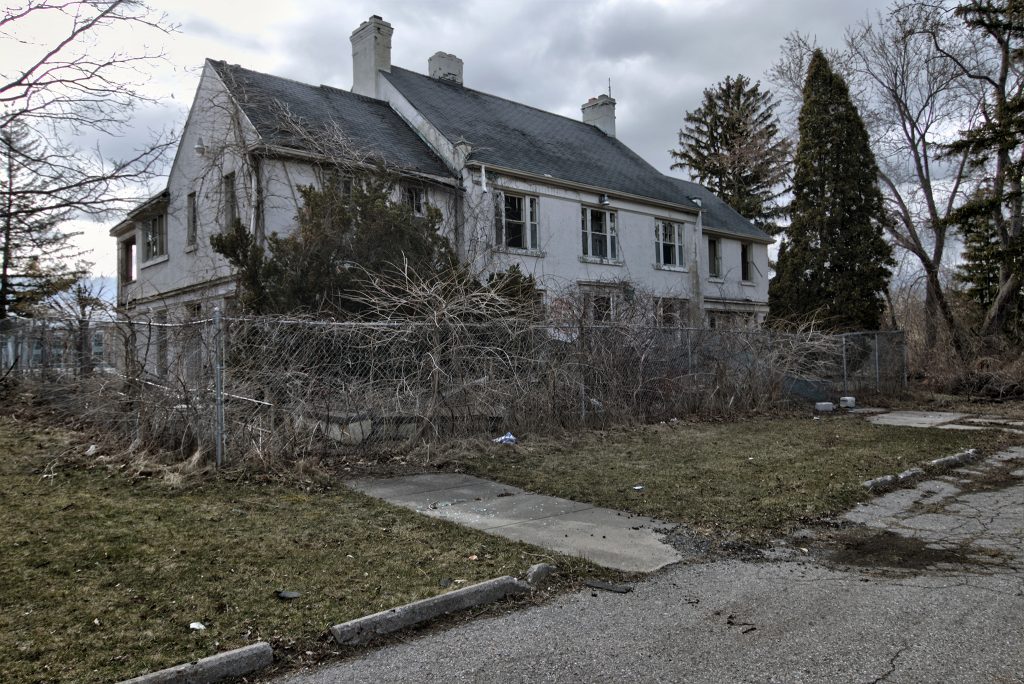
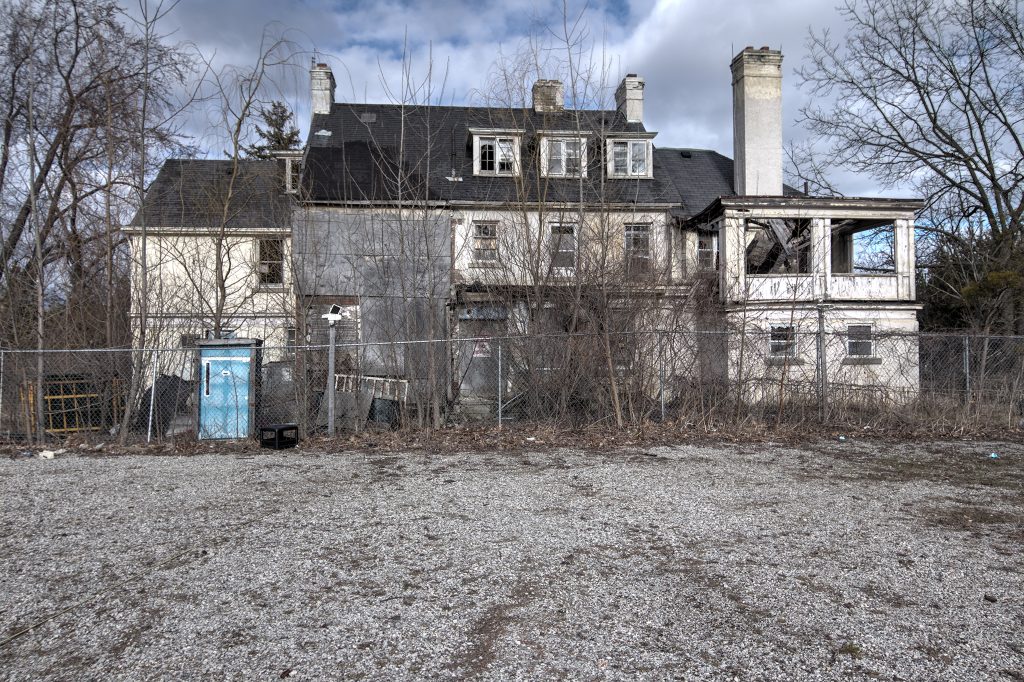
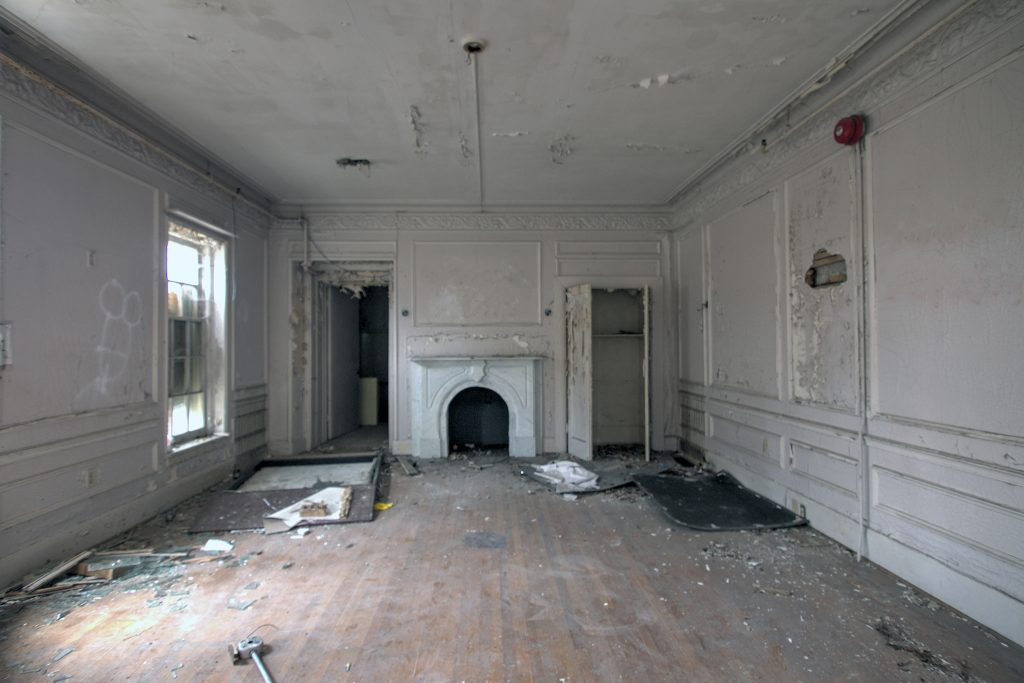
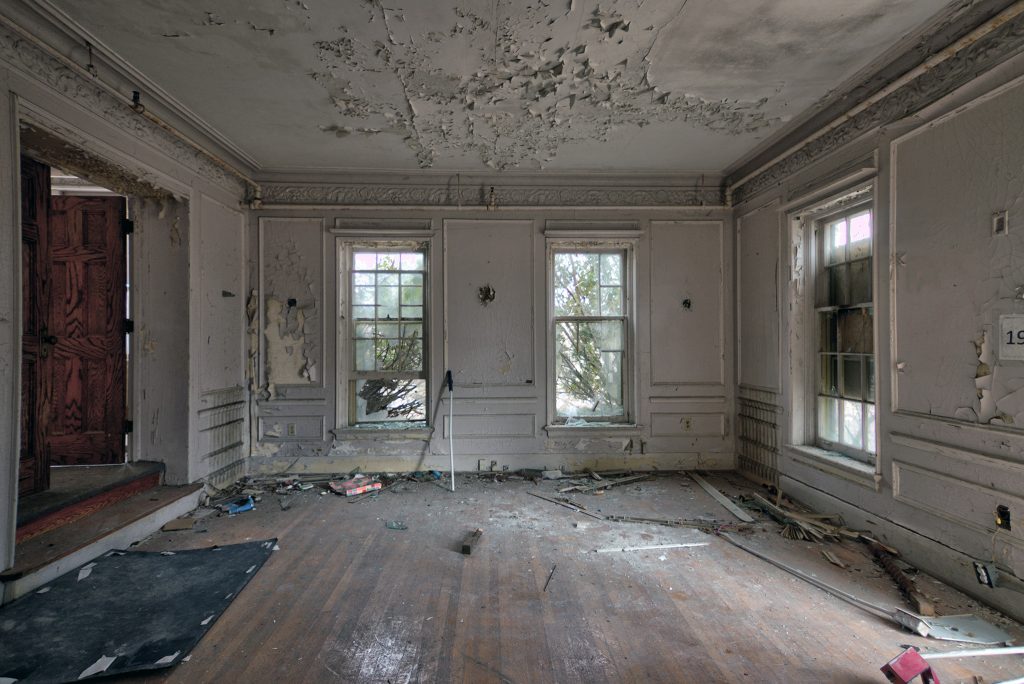
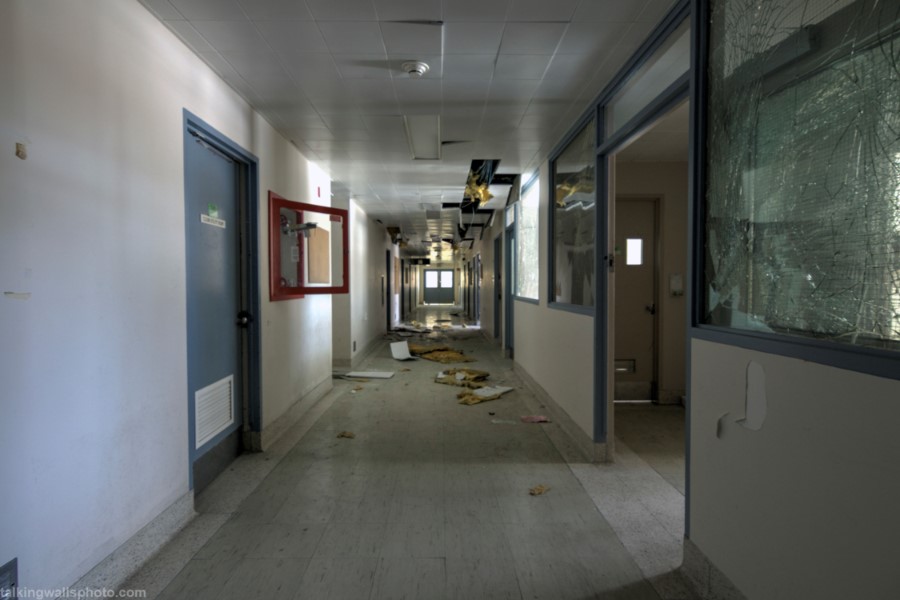
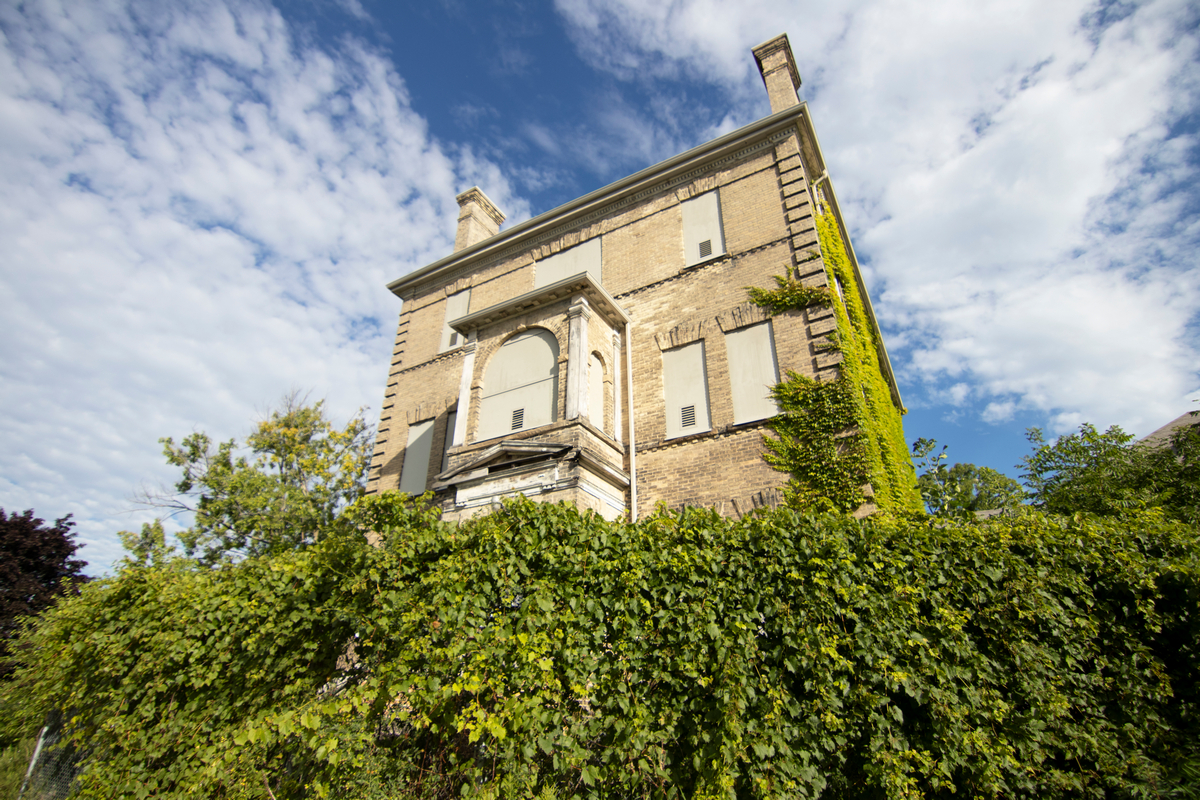
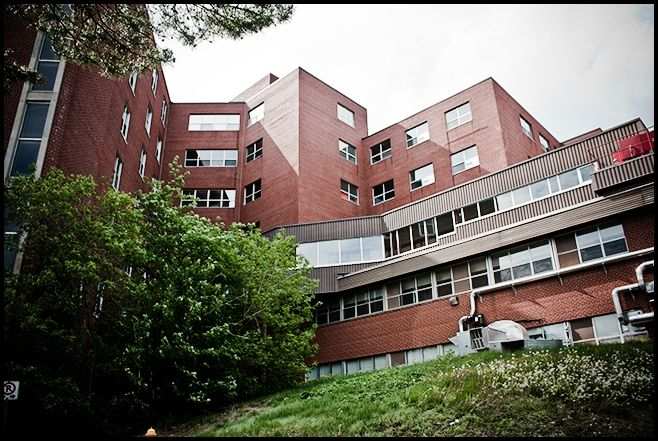
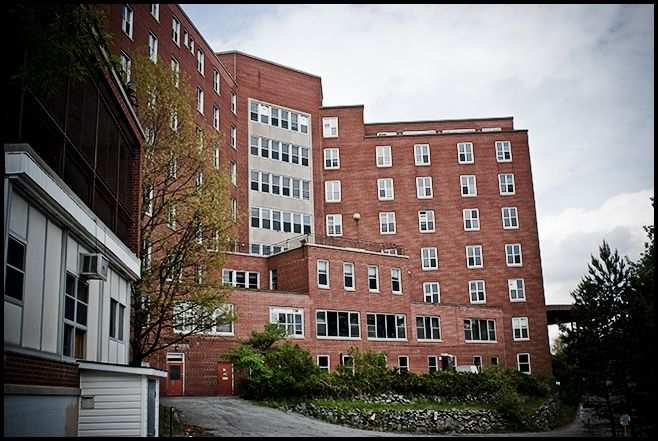
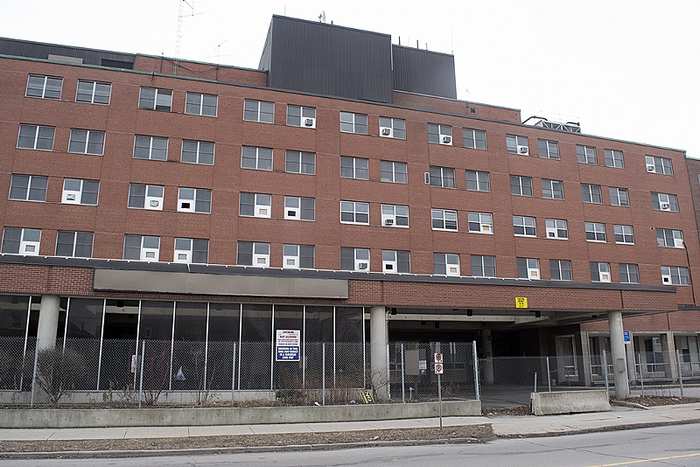
The building was built in Georgian Revival style estate, in 1928 and is one of the last remaining of its kind in Vaughan. The old Vaughan Glen Hospital is located at 9000 Bathurst. Note that this building is just one of a series of properties that were used by Bloorview.

Research by TWP
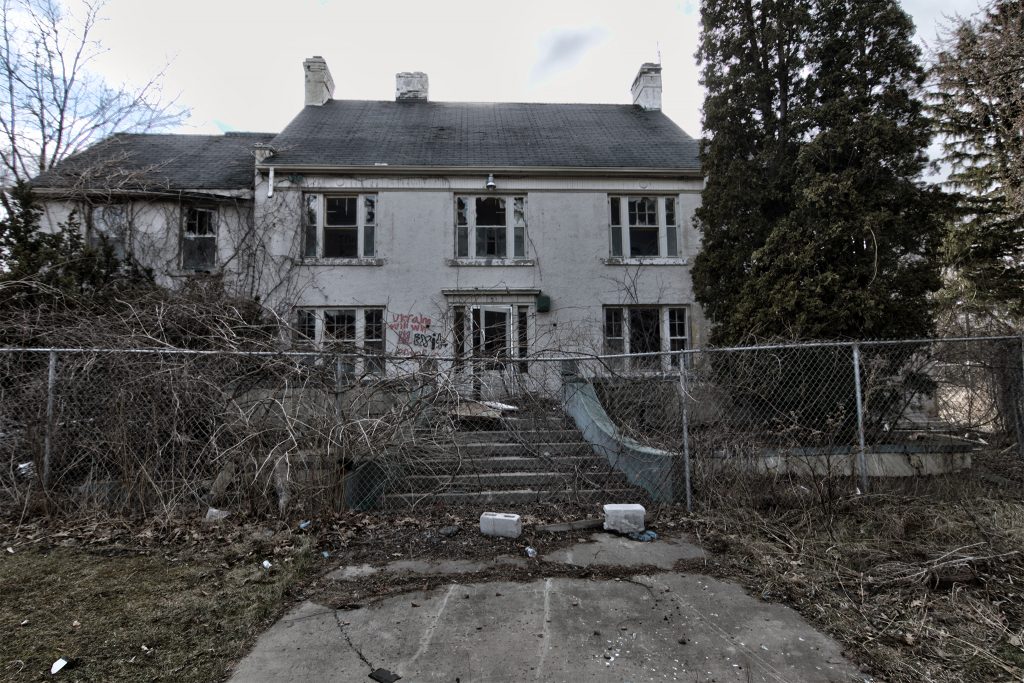
Vaughan Glen Hospital closed in 1994 and the property was sold to the Islamic Shia Ithna-Asheri Jamaat.

The hospital is located at 9000 Bathurst Street.

Woodstock General Hospital

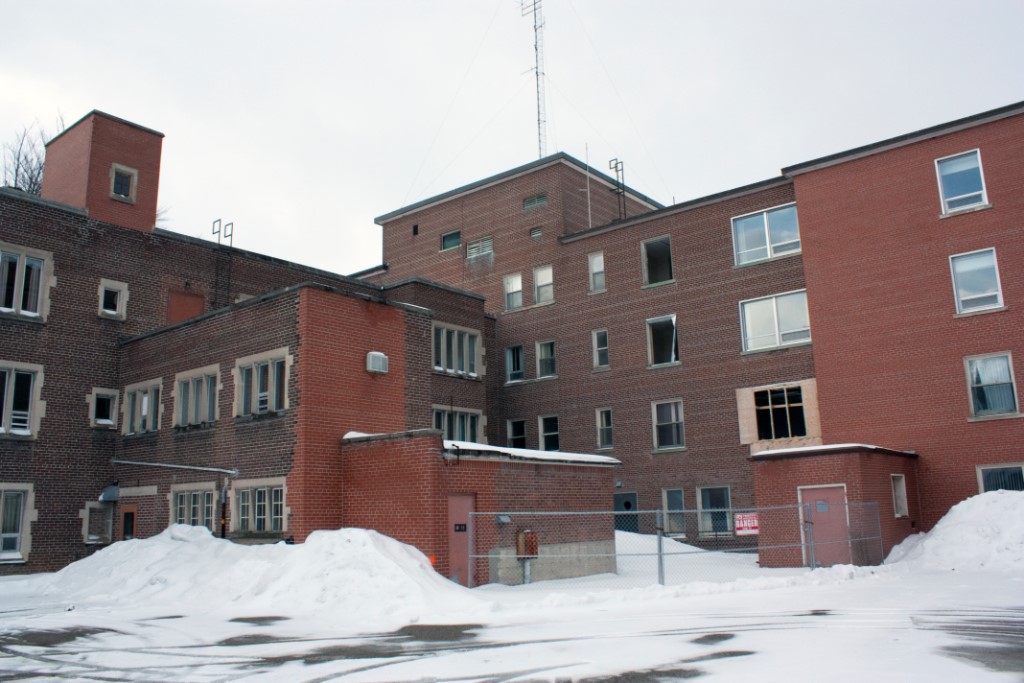
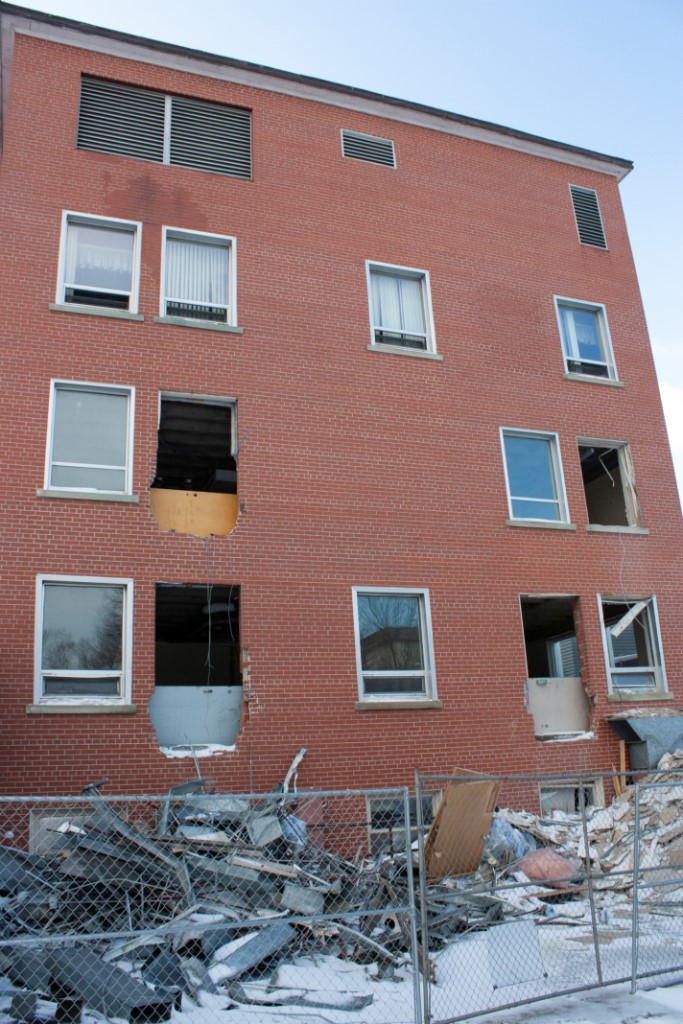
Following several typhoid epidemics and six years of debate, the Woodstock General Hospital was opened in 1895 and was situated on a hill between Riddell and Wellington Streets in the Town of Woodstock.

The original hospital contained a small operating room and thirty patient beds. In 1924 the West Wing was added to the property, an X-Ray department in 1925 and a Children’s Warn in 1935.

By 1951, Woodstock General Hospital had fifty-eight doctors and 119 beds which included 26 children’s beds and one isolation.

In 1954 work began on a new addition to the hospital, which saw most of the original structure torn down and replaced with a new wing facing Riddell Street. This new wing, comprising of a basement and three floors, included a laboratory, pharmacy, kitchen, administrative offices, and emergency department.
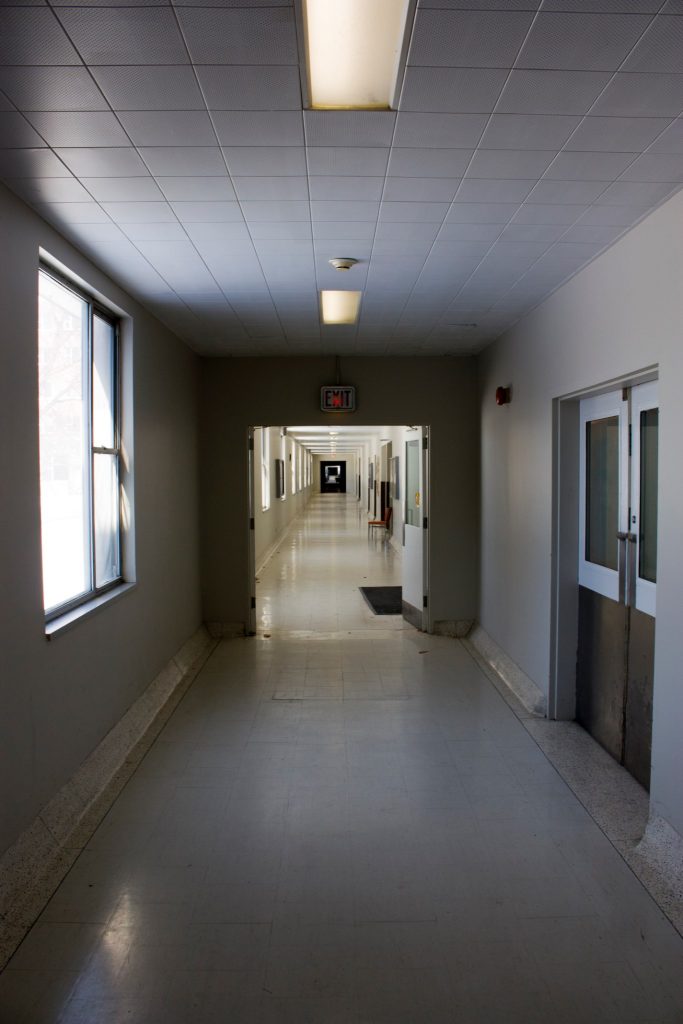
The new addition increased bed capacity to 155 beds and created two new operating rooms. On May 15, 1955 the patients were transferred to the new building. In 1967 another major addition was added to the hospital. Known as the Farthing Wing, it included physiotherapy facilities and a new laboratory. In 1997 renovations to create a new surgical suite, recreation room and chemotherapy and dialysis unit began.

In 2008 work started on a new three-story 32,515 square metre facility, on Juliana Drive, which would be double the size of the current facility and would include a twenty-two bed in-patient rehabilitation program, surgical services with five operating room theatres, a maternal women’s health unit and a dedicated pediatric room, as well as improved mental health facilities.

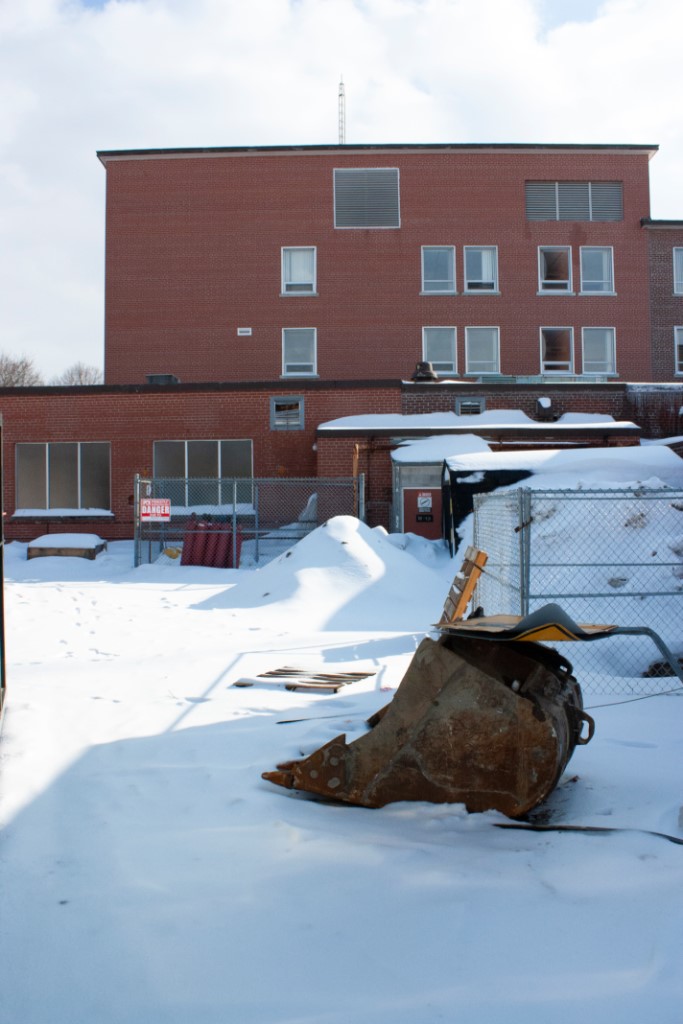
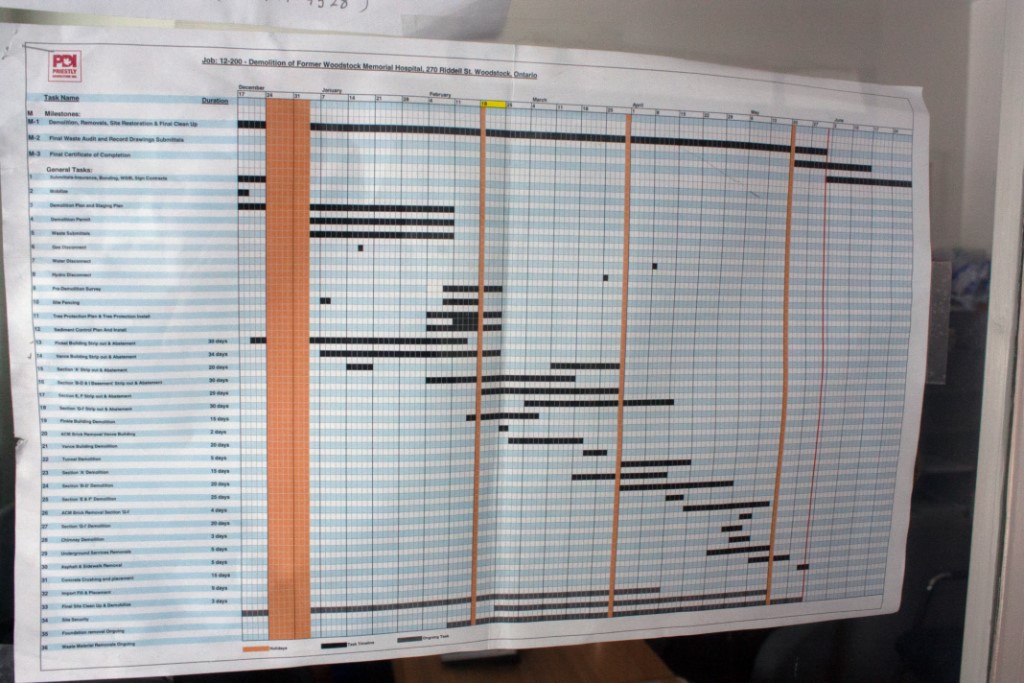
In 2011 staff members and patients were moved to the new hospital. On November 9, 2012 a demolition contract was awarded to Priestly Demolition. The old hospital was demolished in 2013.

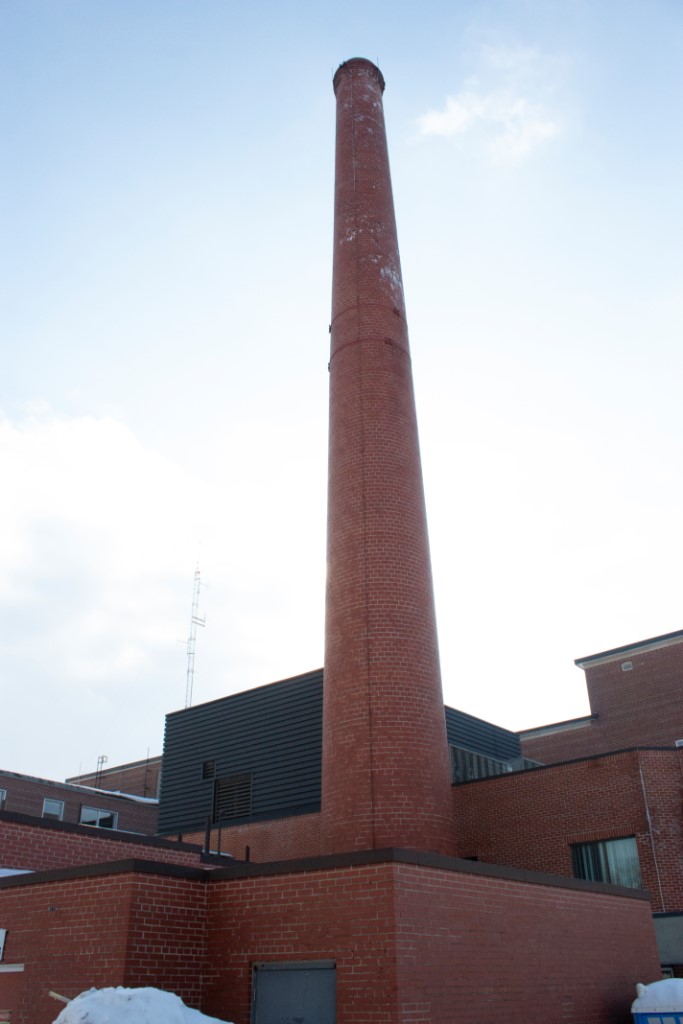
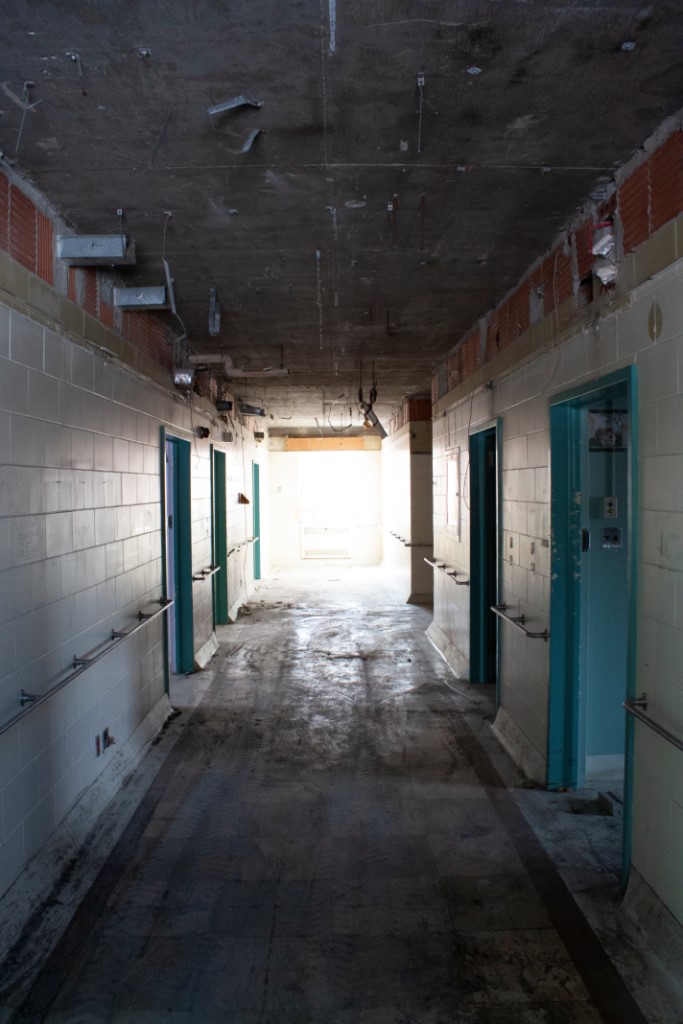
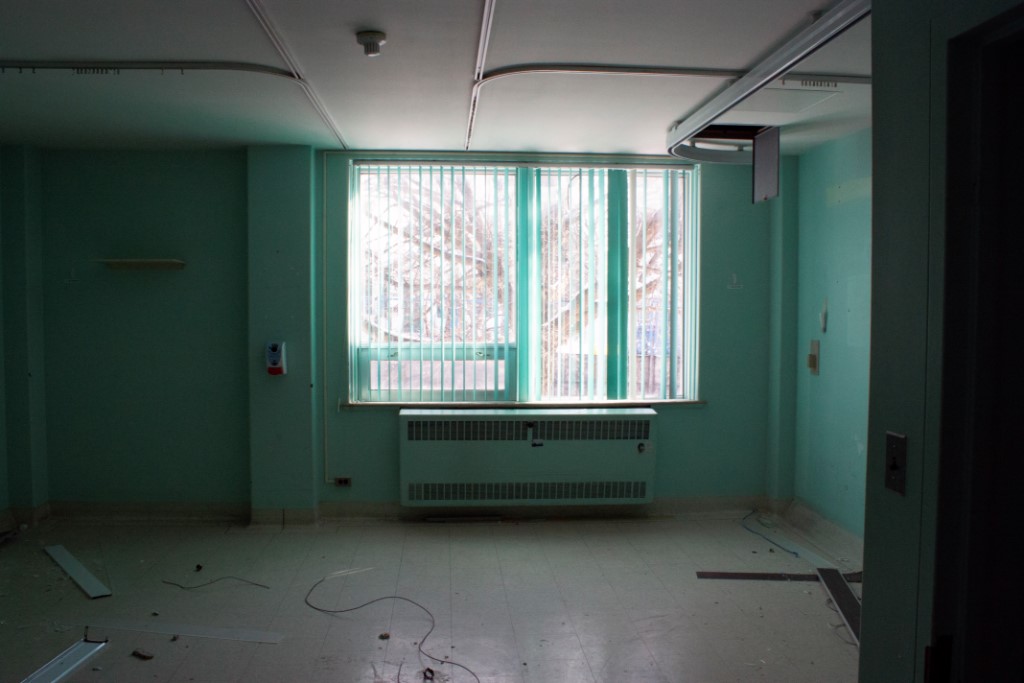
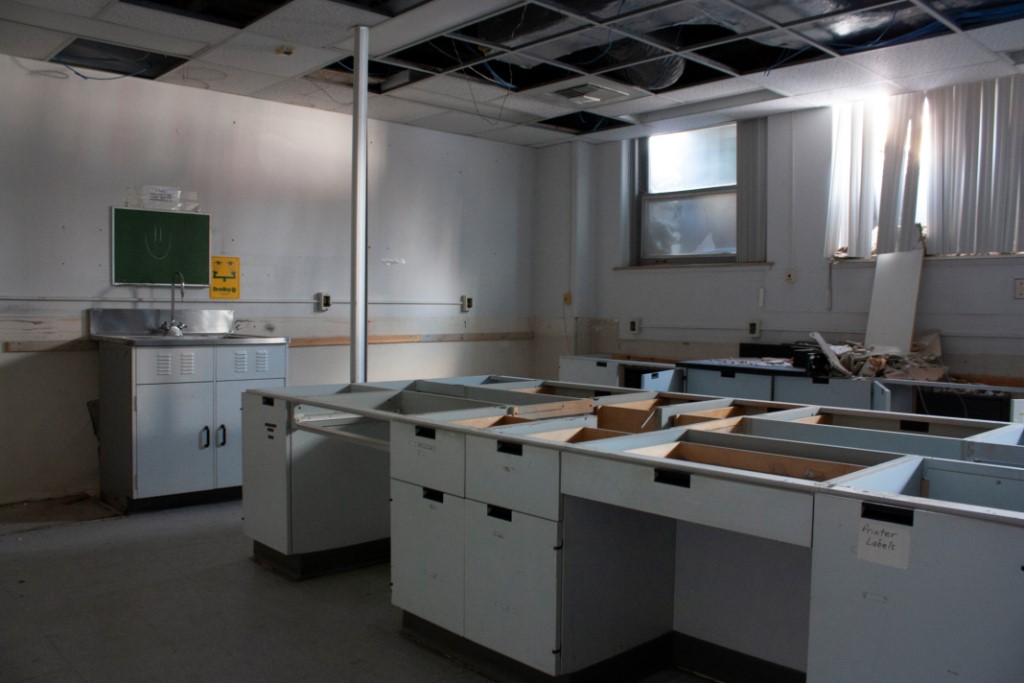
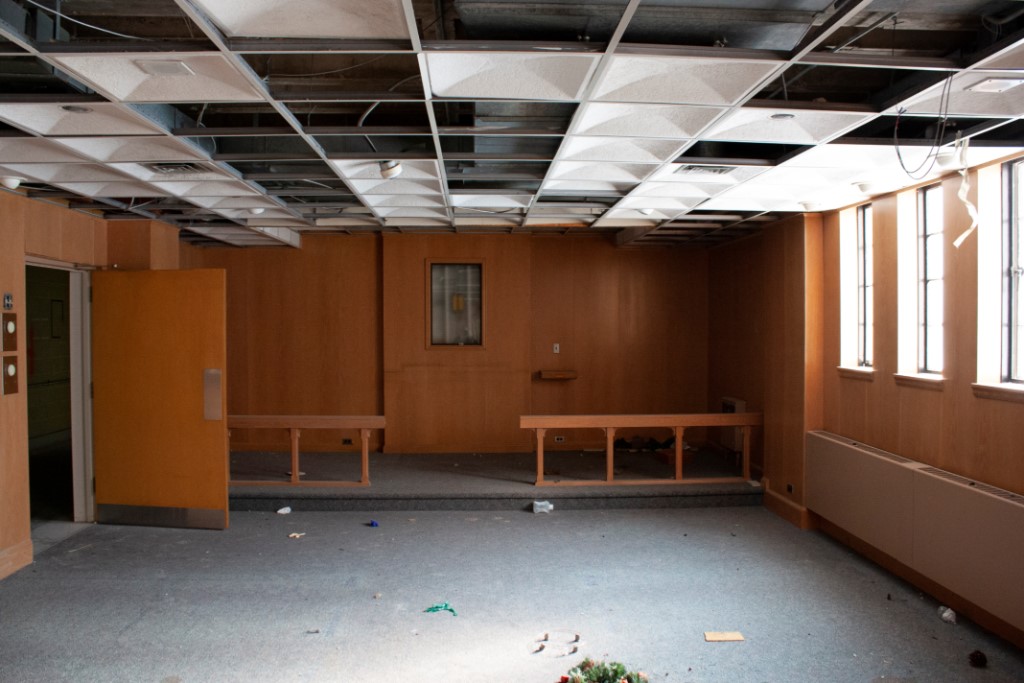
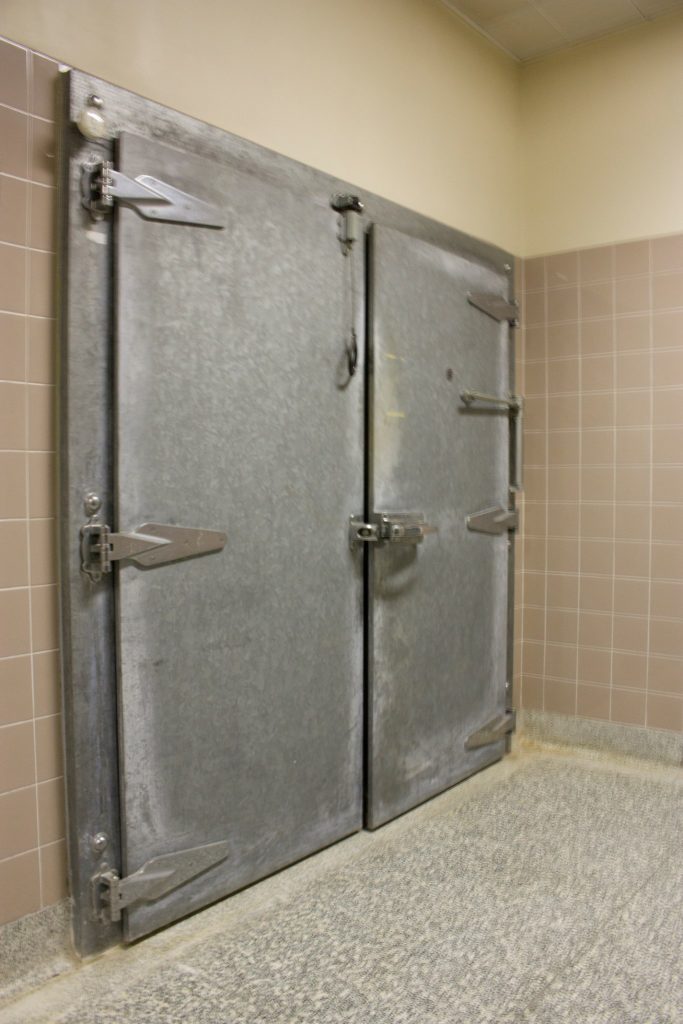
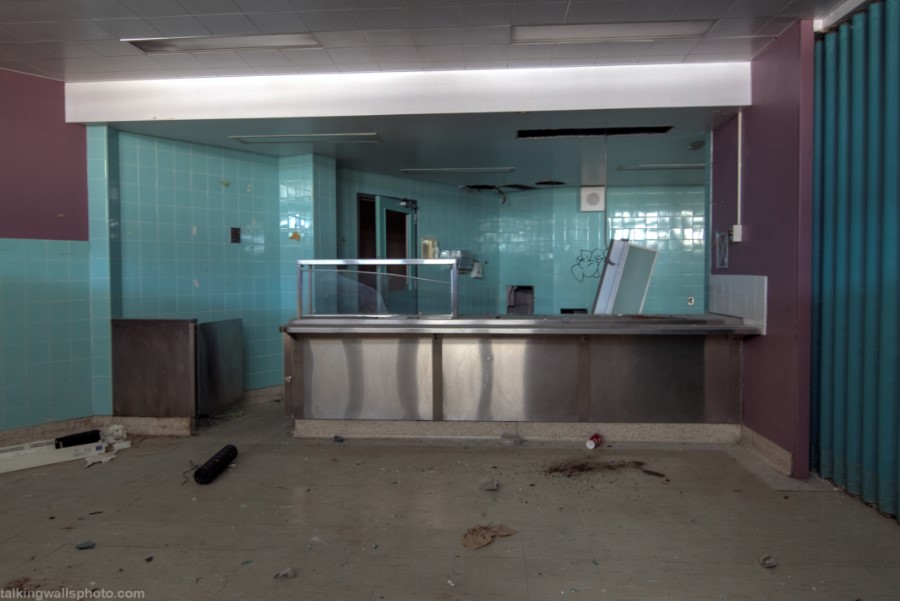
A very cool security guard allowed me inside to take photos, though the morgue was off limits. These photos are quite old.


London Psychiatric Hospital | Regional Mental Health Care (London, Ontario)

The London Asylum for the Insane once stood on the grounds of 850 Highbury Avenue in London, Ontario. The asylum’s name was later changed to Ontario Hospital London. In 1963, the Ontario Hospital London was demolished and replaced with the London Psychiatric Hospital.

The original asylum examination building still stands today but is extremely unsafe to explore due to the flooring.

In 2001, St. Joseph’s Health Care took over the institution and changed the name of the facility to Regional Mental Health Care London (RMHC). The hospital provided in-patient and out-patient support services for people suffering severe mental health issues. The facility was sometimes referred to as the Highbury Hilton, presumably for people who were long-term patients there.

The Regional Mental Health Care facility operated until November 2014 when services were transferred to the Parkwood Institute.

On September 28, 2014, St. Joseph’s held a mental health care legacy event. About 6,000 people attended the event to mark the closure of the mental health care site. Horse-drawn carriage rides were offered. The last patients left November 2014 for Parkwood Institute.

While the majority of the former RMHC property was shut down after 2014, a laboratory in the highest portion of the building remained in operation until 2020. By late 2020, the entire property had fallen into disuse.

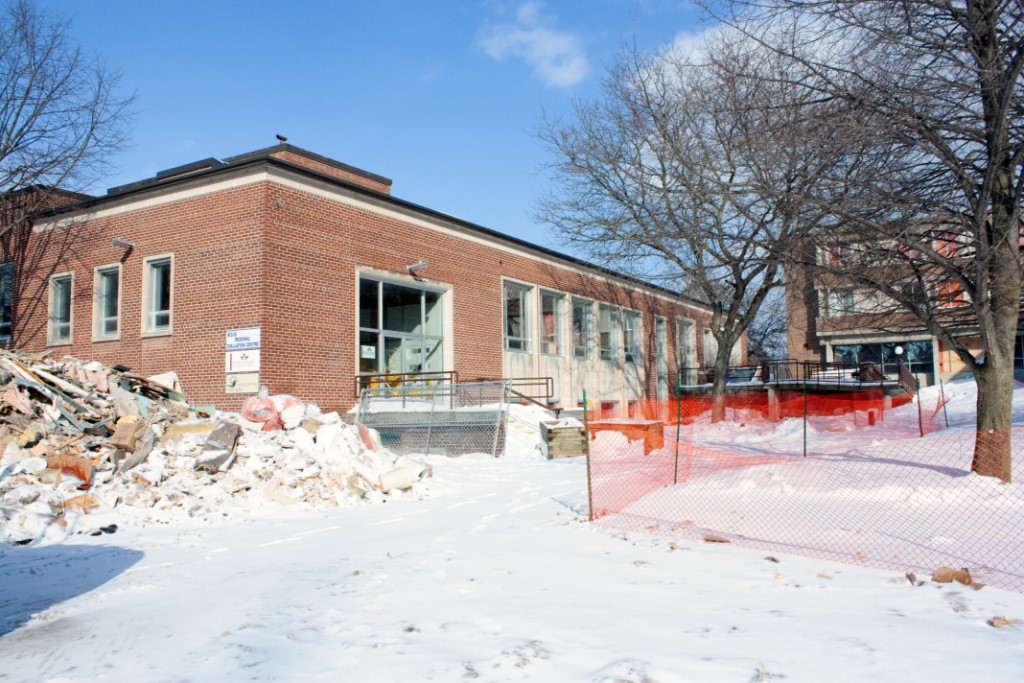
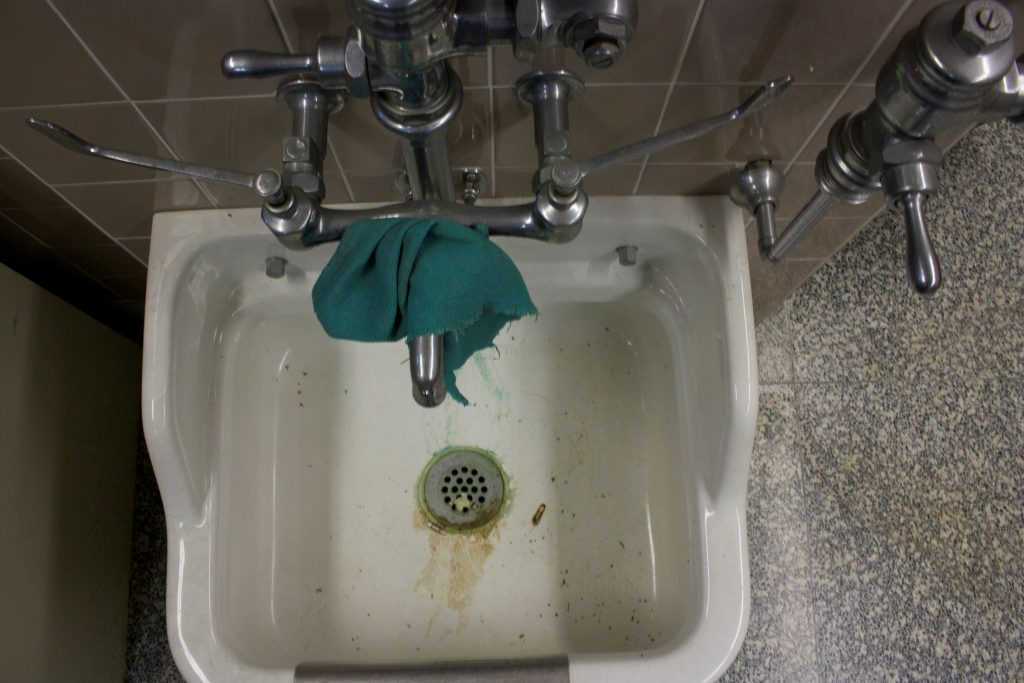
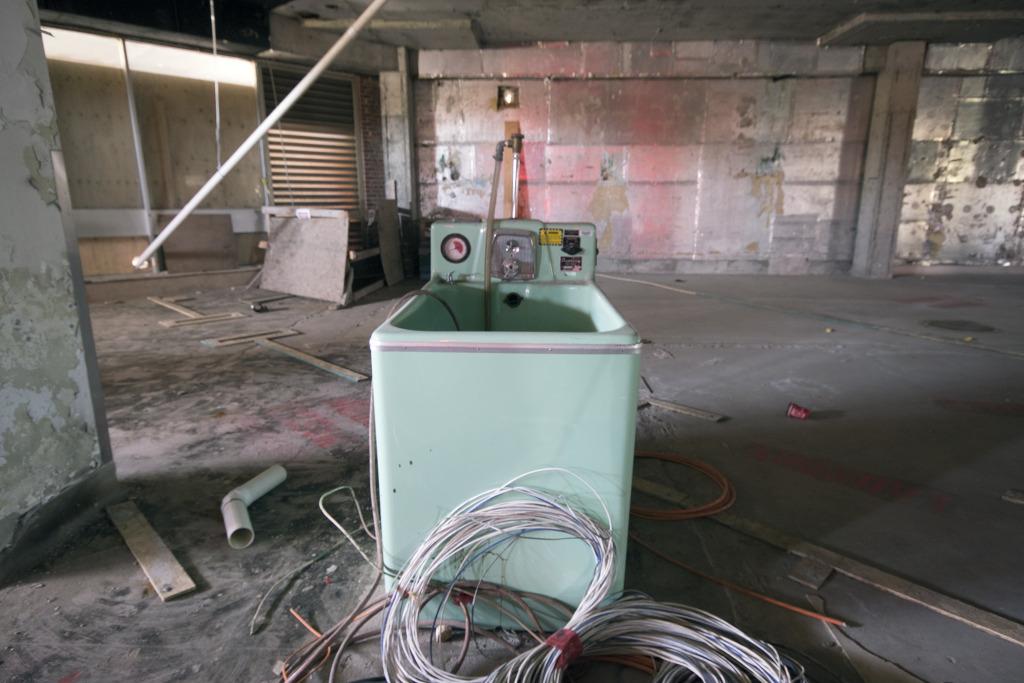
In 2015 I visited the former hospital. It was a tense visit because there was active security on the grounds and working video cameras everywhere. The basement was eerily quiet. I could hear some machinery humming away and expected to see a worker every time I turned a corner. We were able to find the former morgue but all that was left was a sink and a drainage pipe in the floor where I believe the table would have once been.

Electricity was still working and the property was PRISTINE.

2015 Photos

In 2015 I visited the former hospital. It was a tense visit because there was active security on the grounds and working video cameras everywhere. The basement was eerily quiet. I could hear some machinery humming away and expected to see a worker every time I turned a corner. We were able to find the former morgue but all that was left was a sink and a drainage pipe in the floor where I believe the table would have once been.

Electricity was still working and the property was PRISTINE.

In January of 2019 it was announced that Old Oak Properties had purchased the 160-acre property from the province for $17 million dollars. The plan is to build over 3,000 homes including townhouses and mid and high-rise towers including seniors and student residences. The development is estimated to take between 10 to 15 years.

Today don’t be surprised if you find people walking their dogs. The forested roads that Superintendent Bucke sought to create a peaceful environment, still live on. There is an assortment of wildlife to be found. It’s a nice place to go for a walk. Stories vary on whether security or police will ask you to leave. I’ve waved to security as they drove past me. I’ve driven past the London Police. Nobody has ever told me to leave.

The windows are now boarded and the hydro turned off. It’s now dark and moldy.

March 2021

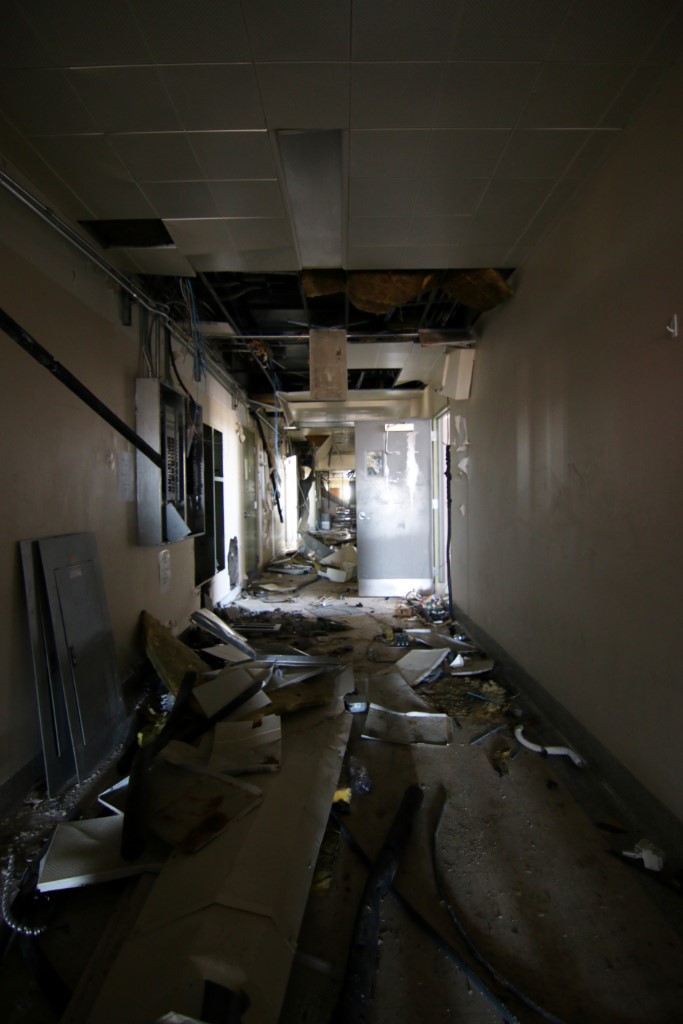
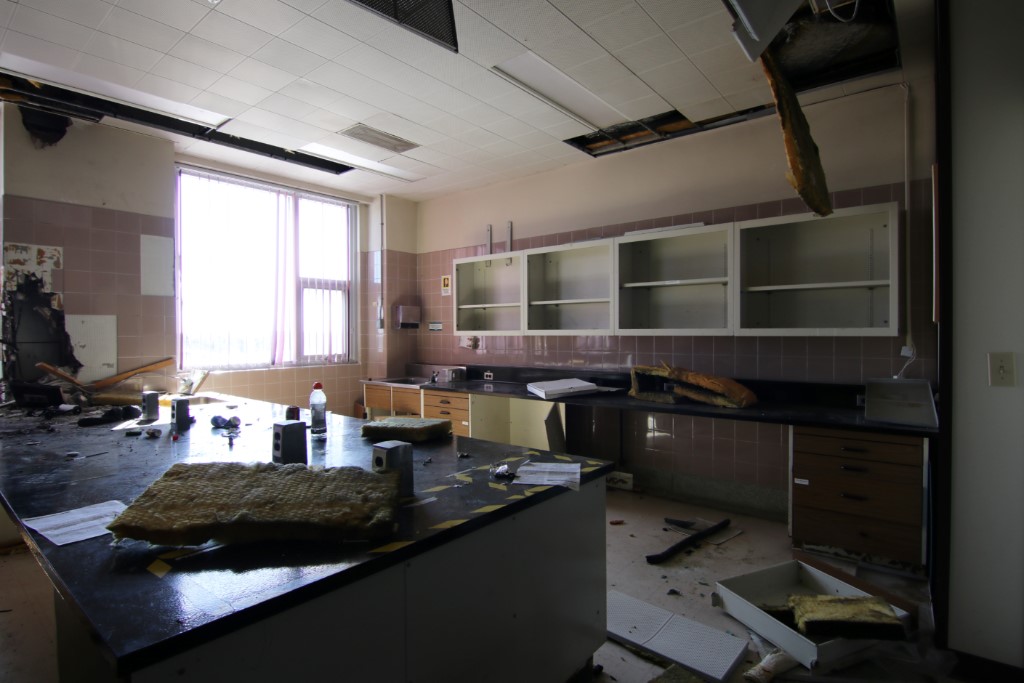
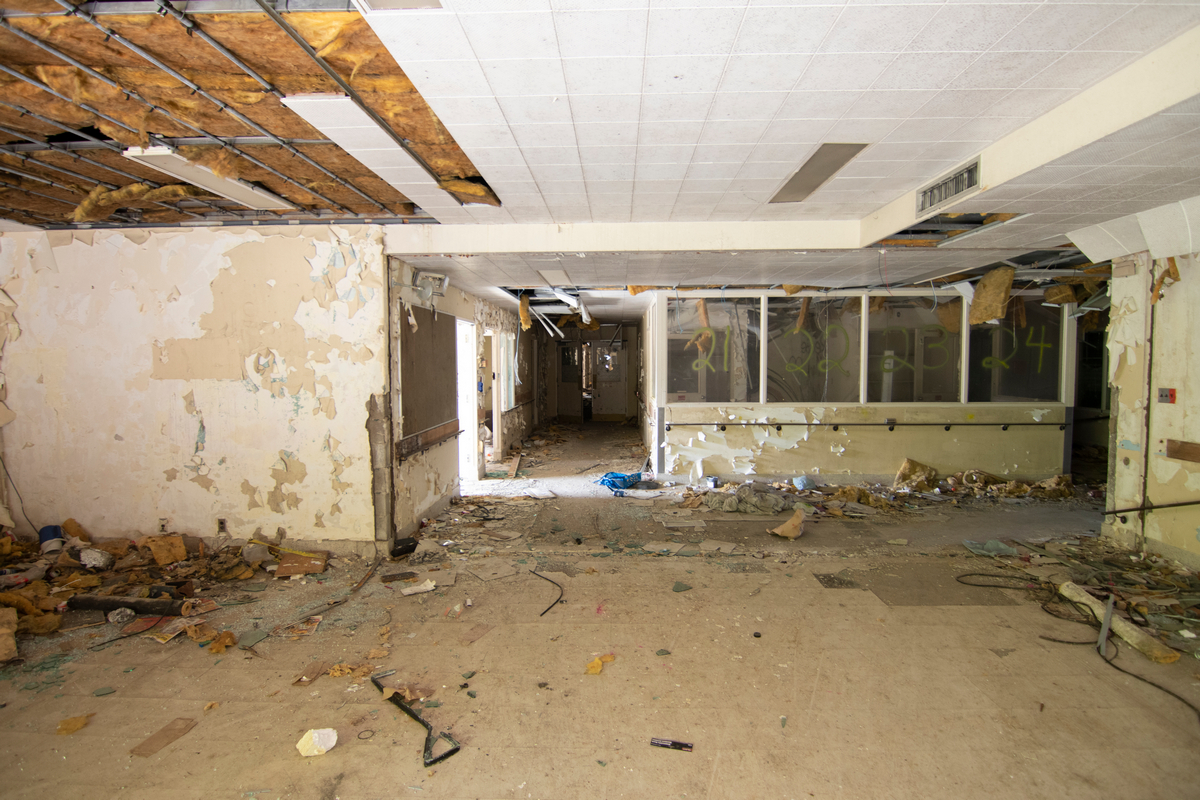
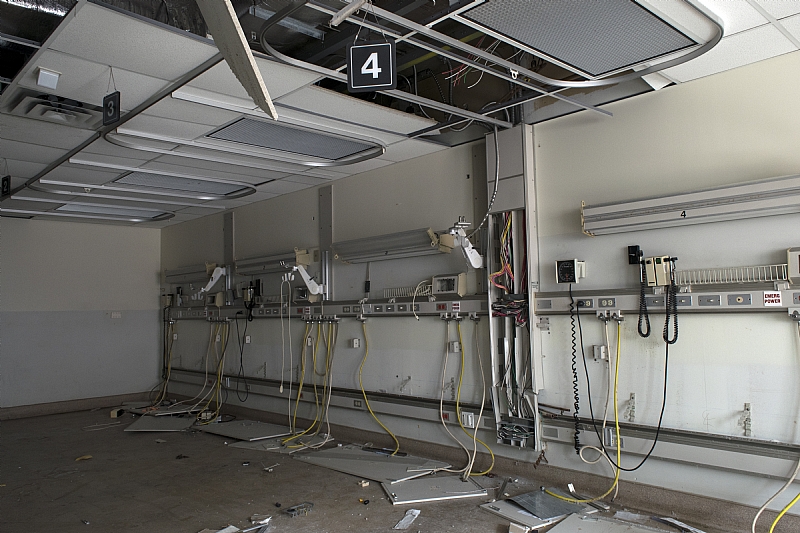
There are several ways inside. Scrappers have been busy here as evident by the holes in the walls and the ceilings ripped apart. Several copper pipes have been cut. There’s semi-fresh food to be found inside, and someone is living in the lab portion of the building. There is extensive vandalism inside and the building looks nothing like it once did from 2015.

March 4th and 7th, 2021

Police and ambulance services are no longer responding to the site due to the repeated trespassing and drug use occurring inside. There are multiple ways inside the buildings.

As of 2023, most of the buildings have been demolished.

August 2022 Photos


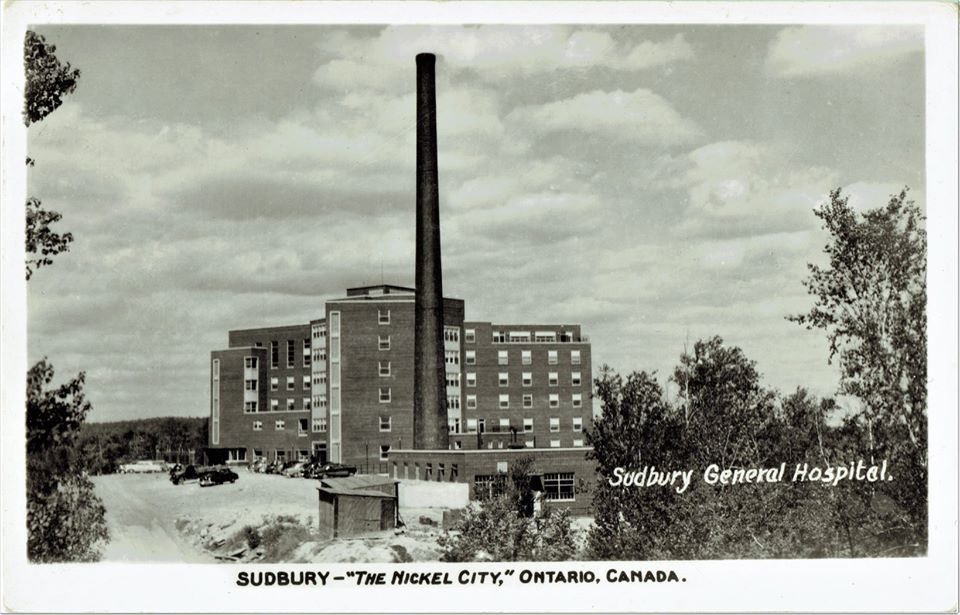
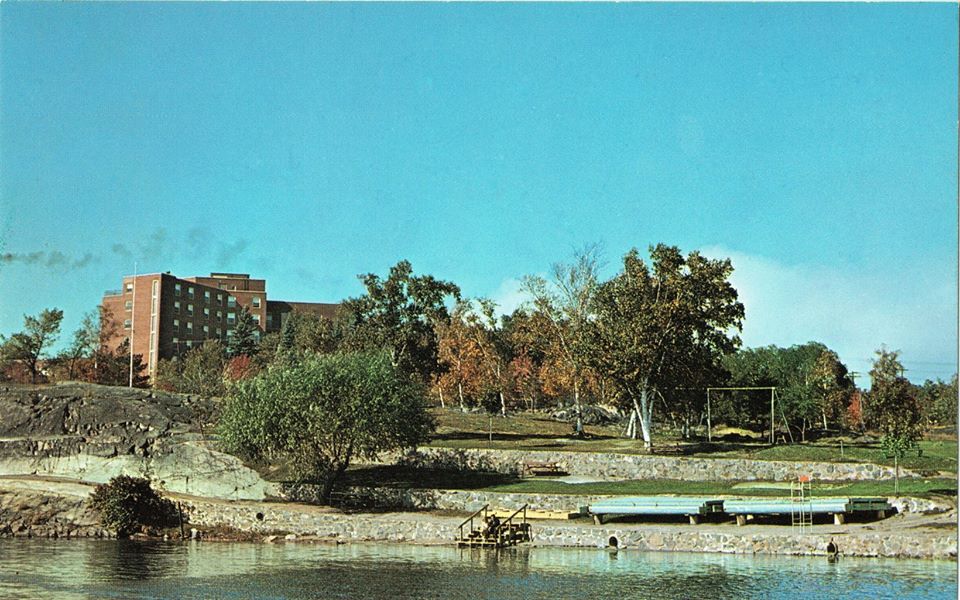
St. Joseph’s Hospital / Sudbury General Hospital – Sudbury Ontario

During the early 20th century the Ontario government was not known to contribute substantially towards the cost of constructing or operating hospitals.

In 1944 a group of physicians along with Bishop R.H. Dignan (Diocese of Sault Ste Marie) and Monsignor J.C. Humphrey (Christ the King Church) approached the Sisters of St. Joseph of Sault Ste Marie for assistance in financing the construction of a new hospital.

On September 2, 1944 the Sisters purchased the Stafford Estate located at 700 Paris Street from Mr. and Mrs. Stafford using their own funding. Mr. Stafford was a retired department store owner.(6) The Lieutenant Governor approved an Order in Council for the Sisters to establish a hospital on the former Stafford property. The hospital was to be known as “The Sudbury General Hospital”.

On April 6, 1948 the official turning of the sod took place. On May 29, 1949 the cornerstone was laid. A small copper box was placed inside the cornerstone as a time capsule to mark the day. The copper box contained the following:
• Saturday May 28, 1949 edition of the Sudbury Daily Star
• The most recent edition of the Catholic Register
• A copy of legal documents
• A penny, nickel, dime, quarter and dollar for 1949
• Religious articles
• Progress schedule for the contractor
• A history of hospitals from the Sisters (6)

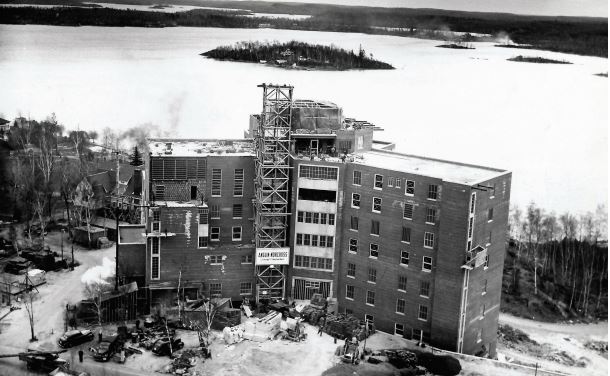
Construction of the Sudbury General Hospiral in 1949
Construction of the Sudbury General Hospital in 1949

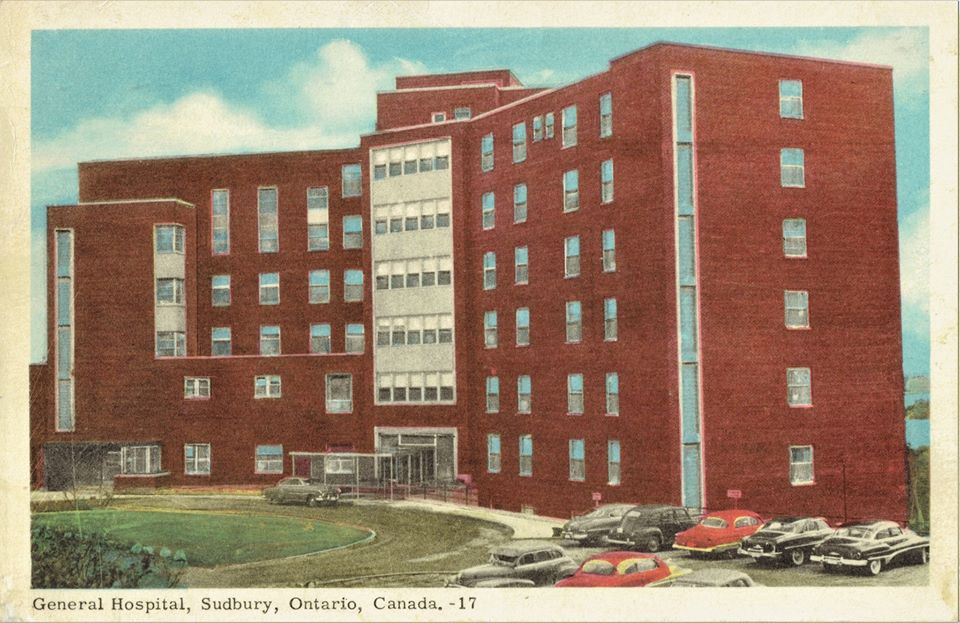
Construction of the Sudbury General Hospital (the last part of the name was dropped) was completed in 1950 at a cost of $3.1 million. The hospital eventually became the regional referral centre for trauma care and surgical services.

The hospital opened on October 15, 1950 with the first patient admitted on November 1. On November 29, 1950 INCO contributed $125,000 towards the hospital.

The Marymount School of Nursing opened in 1953.

In 1954 the new active treatment wing (D wing) opened containing 100 beds, 33 of which were designated for the psychiatric unit while the rest were allocated to the surgical and obstetrical unit. nursery, physio and occupational therapy units. On May 12, 1955 the formal opening of the Psychiatric Unit took place. The four-storey extension was built on the west side of the hospital. It was designed by Louis A. Fabbro.

In 1957 a 37 Gynecology unit opened.

In 1957 the St. Joseph’s Convent located on Louis Street was used to accomodate 37 more nursing students bringing the total to 115 students.

– By 1960 the Sudbury General Hospital contained 326 beds although it was designed for only 190 beds. Additions were made to the hospital over the years including the Mason building.

– In 1962 a treatment centre for cripple children opened for service.

– In 1964 a nuclear medicine department and medical library opened.

In 1966, Marymount School of Nursing introduced a two-year nursing program with one year of internship. The school was renamd to “St. Joseph School of Nursing.” Forty-eight students enrolled in September 1966.

In 1967 the hospital opened their ICU (intensive care unit), poison control centre and volunteer services centre.

– The last student graduated from the Marymount School of Nursing on May 28, 1969.

– On October 15, 1969 regional ambulance service was established and an ambulance garage constructed. The garage was to the left of the main entrance.

– By 1970 neurosurgery was available at the hospital.

– In 1971 excavation began on a new A-wing that included delivery rooms, operating theatres, intensive care, major emergency, x-ray and laboratory facilities and an eye, ear, nose, throat unit.

– In 1972 the Pastoral Care department was opened.

– By October 15, 1973 the hospital could accomodate 375 patients. It was during the same year that an inquest began into the deaths of 22 patients. Many of the deaths that occured at the hospital occured in the new A-wing and were thought to have been caused by a mix-up in pipes containing nitrous oxide gas and pure oxygen.

– On September 29, 1980 the hospital received a CAT scanner.

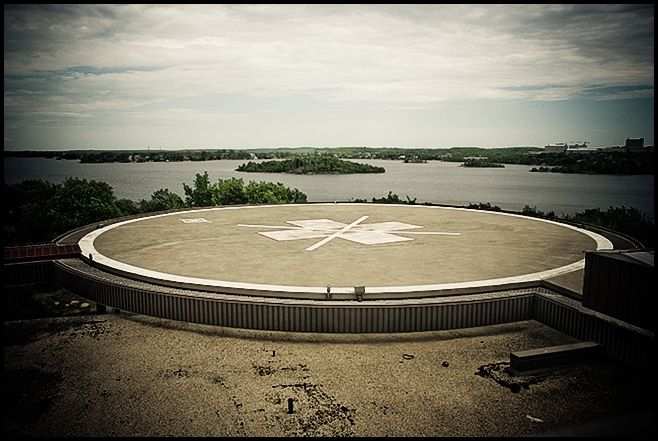
– On October 16, 1986 the formal opening of the helipad took place.

– On March 25, 1989 a fire broke out in a storage room causing major smoke damage. No injuries occured and arson was suspected.

Abduction

On November 1, 2007 a Kirkland Lake woman dressed as a nurse abducted a newborn baby from the St. Joseph’s Hospital. The hospital went into an immediate lockdown, an AMBER Alert was issued and all roads leading out of the city were blocked. The woman was arrested later that night at her home.

The hospital operated until March 29, 2010.

The Closing Process

In 1997 the Ontario Health Services Restructuring Commission decided to consolidate Sudbury’s three hospitals into one location – the Laurentian Hospital site. The General and Memorial hospitals were to close and be demolished. The process was to be completed within a two year timeframe while the Sisters of St. Joseph would continue to operate the hospital while leasing the property for $1 a year.

The Sisters of St. Joseph negotiated a new role with the province to provide long-term care for seniors at a new location – the St. Joseph’s Villa. Part of the agreement was for the Ministry of Health and Long Term Care to pay for the decommissioning process including the cost of demolition.

Rather than see the location demolished, the Sisters paid for a study to determine if the site could be used as a Long Term Care facility. The study found that the cost of renovations to bring the building up to standards would be too costly.

In 2005 the Sisters called for proposals to redevelop the St. Joseph’s site. The Sisters included a “Schedule of Conditions” that stipulated the bidder’s plans for the property would have to “support quality of life and healthy living for all” and to continue to “meet the needs of the people of Sudbury”.

In 2006 various groups brought forward their plans for the property but each of them required that the hospital would have to be a “Greenfield” (demolished). The City of Sudbury also bid for the property – proposing to turn the location into a hotel and convention site provided that the property was demolished.

The problem was that as the budgets were adjusted for the hospital restructuring, the cost of demolition was eventually removed from the final price. This left the Sisters unable to consider any of the proposals for the property.

On April 16, 2010 the Sisters notified the City of Sudbury that a local real estate agent had an out of city client who was interested in the property and that it might include the building in the offer. The Sisters initially declined the offer because it did not meet the Schedule of Conditions that were set out during the 2005 bidding process.

A meeting was held on May 20, 2010 with the Ministry of Health and Long Term Care to propose that the government fund the demolition costs. The government made no commitment to pay for the demolition costs and indicated that if they did fund the demolition, that the Sisters would have to pay the province the proceeds of selling the land.

The Sisters were stuck between a rock and a hard place. Their only options seemed to be: pay for the demolition, have the province demolish the property and receive the proceeds of the property sale or to sell the property with the building included.

The Sisters contacted the City of Sudbury on May 28 to inform them of the offer on the property that included the building “as is”. The Sisters would not accept the offer until they could discuss it with city officials. The offer was from an out of town developer – and the Sisters would have preferred the location went to a Sudbury developer instead.

The out of town developer indicated that their offer had to be accepted by 5:00 pm on May 31, 2010. The Sisters set up a video teleconference with City of Sudbury officials and advised them that they had received an offer and were prepared to accept it. City officials assured the Sisters that they would let the Mayor of Sudbury know about this.

The City of Sudbury did not respond to the Sisters before the deadline that day and so the property was sold to the outside party – Panoramic Properties of Niagra Falls. When details of the sale were released to the media, citizens criticized the City of Sudbury for allowing the property to be made available to an outside developer. The City on the other hand, criticized the Sisters for selling the property to an out-of-city party. The Sisters of St. Joseph released a full page ad in the newspaper indicating that they had informed city officials about the pending sale – and that the city failed to respond.

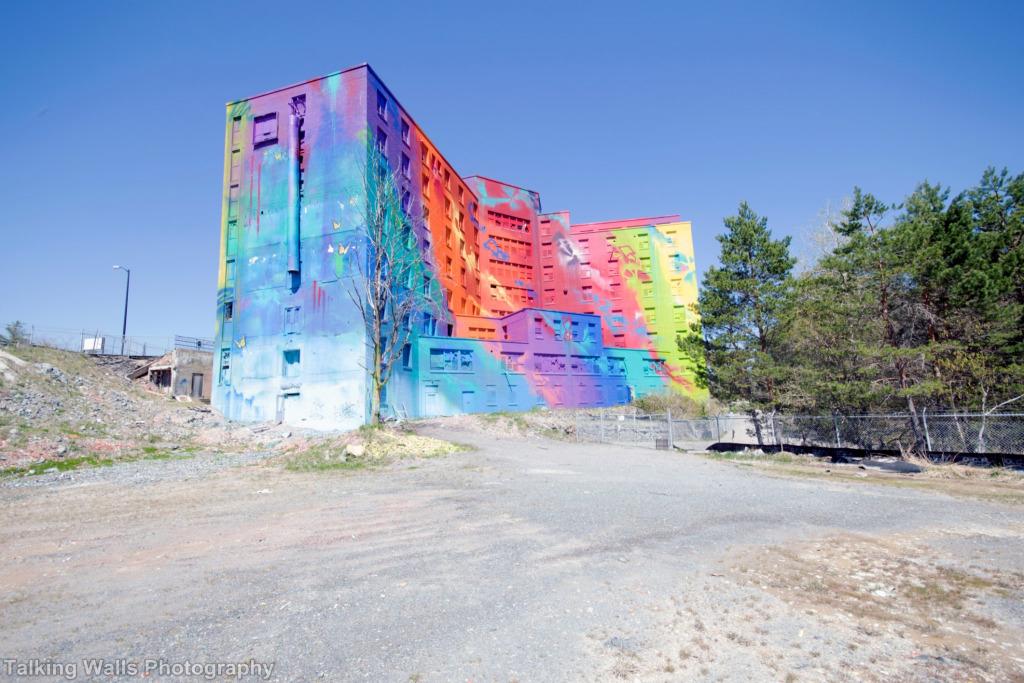
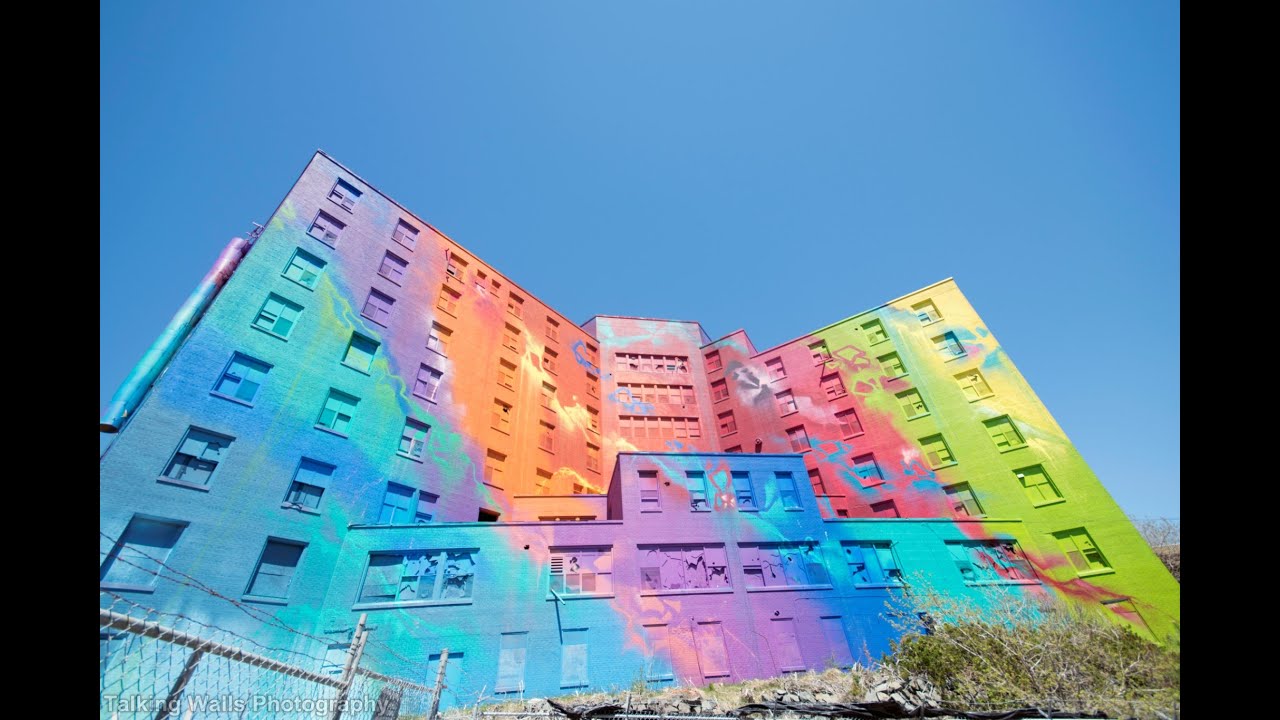
Canada’s Largest Mural

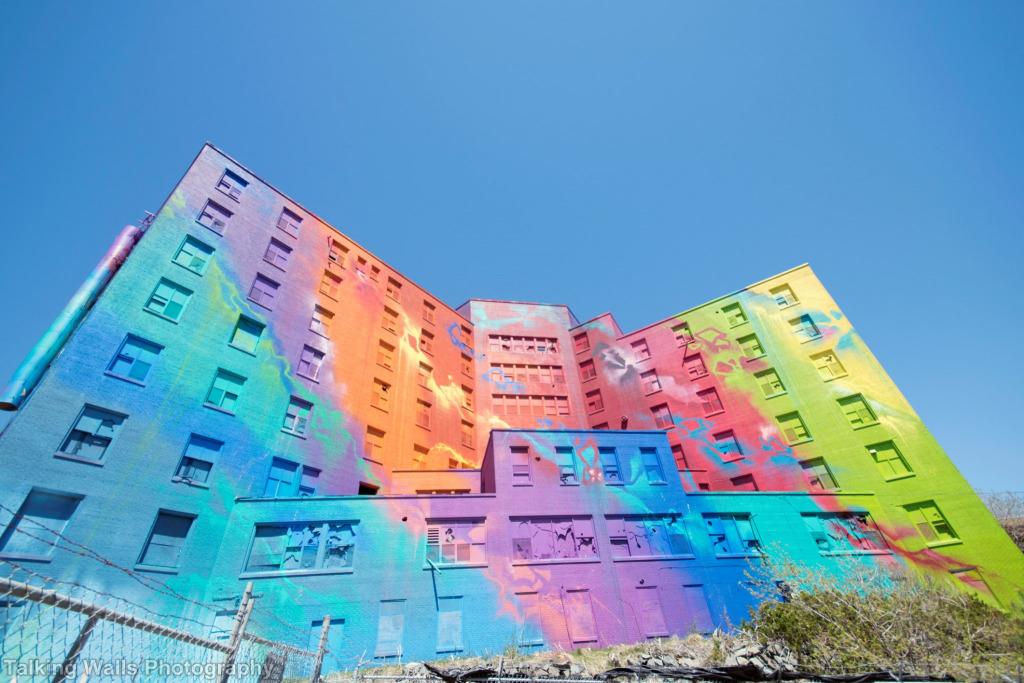
St. Joseph's Hospital Sudbury mural photo

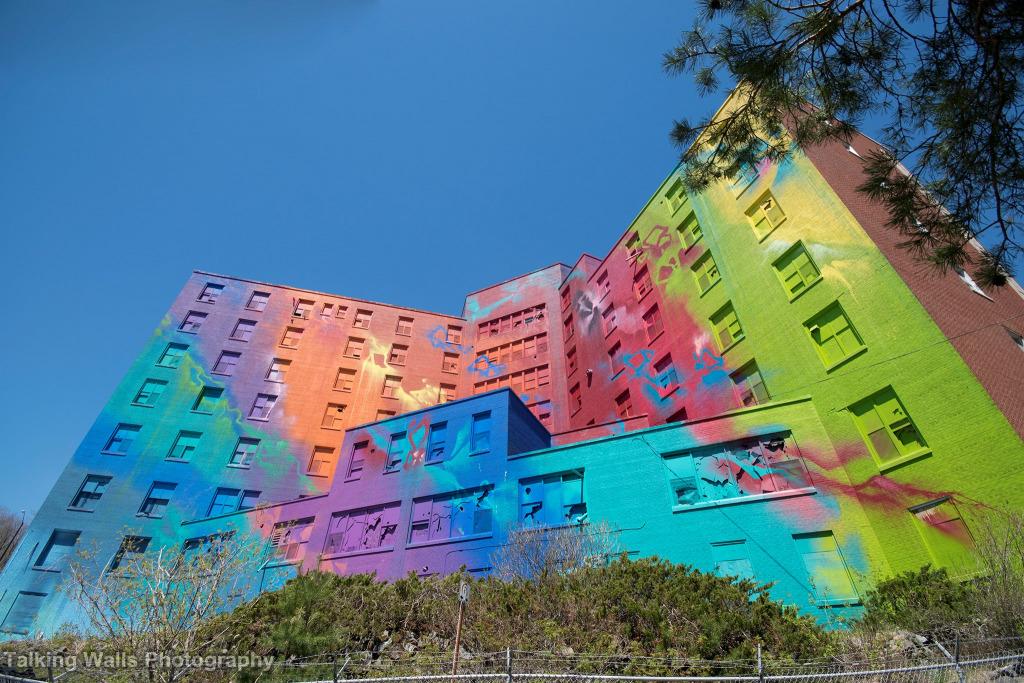
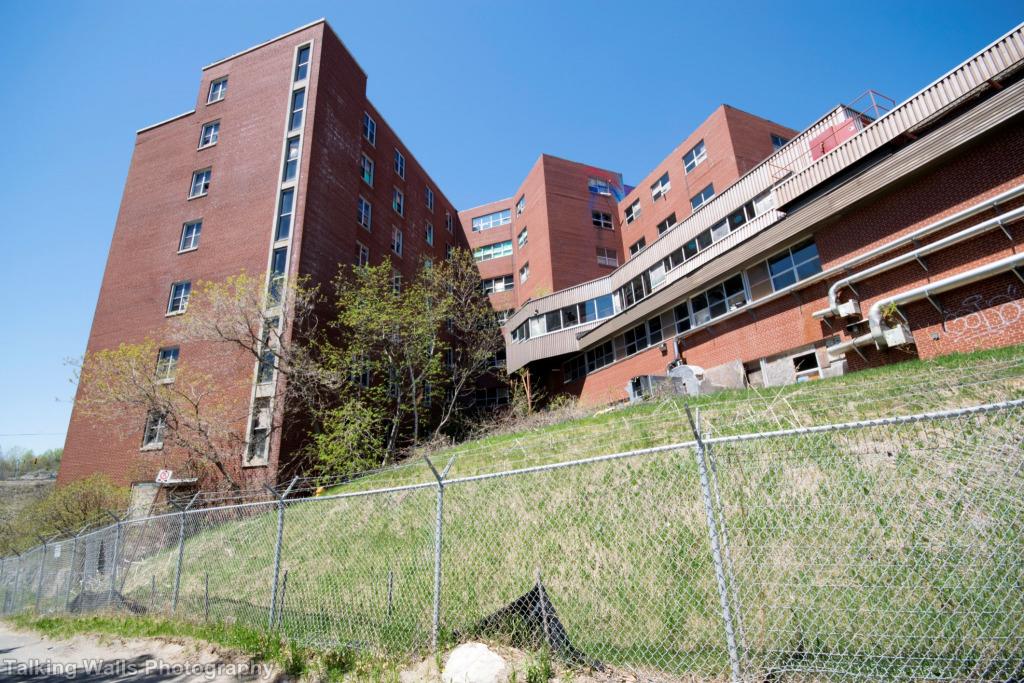
The Up Here Festival is a Sudbury-based urban art and music project. In 2019 the festival commissioned muralist artist RISK to paint an 74,000 square foot mural on the former hospital. Christian Pelletier, the co-founder of the Up Here Festival said, “When people drive past it on Paris or see it from across the lake, it will look like a dream factory. It’s going to tell the world that Sudbury is one of the coolest, most creative places to live.”

The mural was started on August 19th, 2019 and continued for twelve days. It took approximately 860 gallons of paint were used, five people from RISK’s crew, 24 local people and over 1500 hours. Fifteen 15 per cent of the funding for this particular mural project came from a provincial grant, from Ministry of Tourism’s Celebrate Ontario fund. The remainder came from other sources, including sponsorships, donated equipment and discounts on paint. Panoramic Properties, who owns the property also contributed financially to the project.(8)

Timelapse: Watch Canada's largest mural take shape


By 2025, the novelty has pretty much worn off for Sudburians.

Post-Closure Events

After the hospital closed it became the target of vandalism. Sometime between November 25th and 28th vandals broke inside and smashed walls, doors, glass and set off fire extinguishers. The damage was estimated to be more than $5000. (1)

On May 17th, 2025, the body of a 24 year-old man was discovered inside the hospital. Foul play was not suspected. (4)

On May 21st, 2025 combustible material left behind from a movie shoot were set on fire. The Sudbury Fire Department was on site. (5)

Demolition

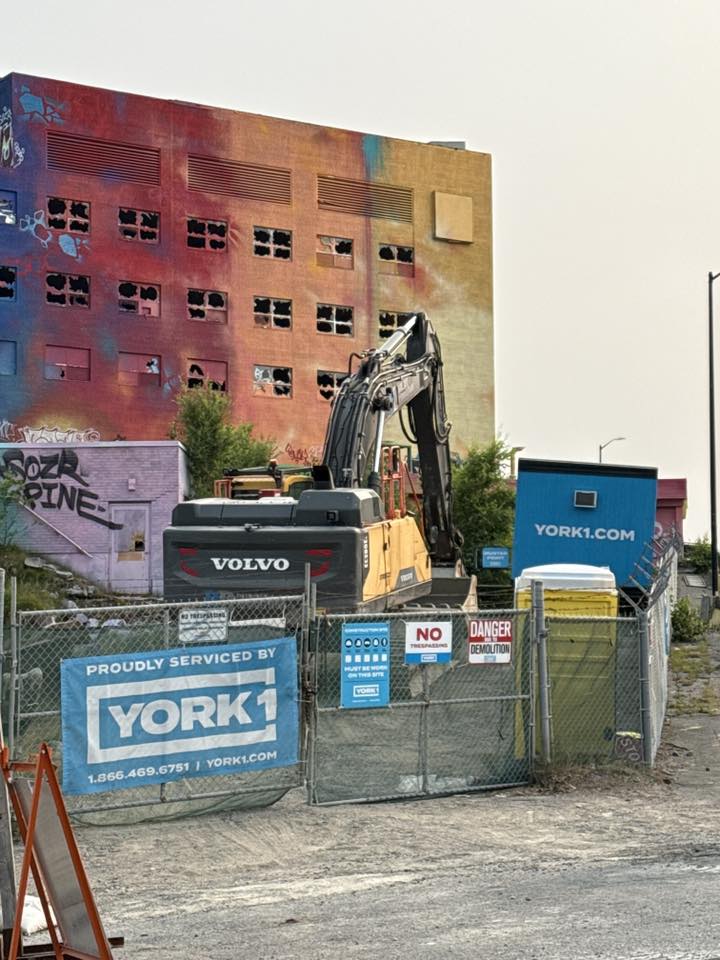
During the first week of August 2025, demolition signage went up and heavy equipment was been moved onto the property. It appears demolition will be taking place shortly. On August 8th, 2025 Sudbury’s mayor announced that the city had issued a demolition permit to Panoramic Properties earlier that day. (9)

Photo by Frank Pelletier

Write-up, photos and video by Talking Walls Photo (Mike Lalonde.)

Sources:
(1) http://www.thesudburystar.com/ArticleDisplay.aspx?e=2872674
(2) Sister Bonnie MacLellan – General Superior
(3) Sister Mary Sheridan
(4) https://www.sudbury.com/local-news/body-of-34-year-old-man-found-in-former-sudbury-hospital-10683834
(5) https://www.cbc.ca/news/canada/sudbury/old-hospital-fire-1.7540728
(6) A History of the Sudbury General Hospital
(7) https://www.cbc.ca/news/canada/sudbury/hospital-mural-community-debate-1.5255187
(8) https://uphere.com/news/2019/9/2/risk-mural-canada-sudbury
(9) https://www.thesudburystar.com/news/local-news/developer-gets-go-ahead-to-take-down-paris-st-hospital

Photos from 2020 (everything stripped)


Photos from 2011 (pre-stripping)


Video

The now abandoned St  Joseph's Hospital in Sudbury, Ontario
When was St. Joseph’s Hospital in Sudbury, Ontario built?

In 1944 a group of physicians along with Bishop R.H. Dignan (Diocese of Sault Ste Marie) and Monsignor J.C. Humphrey (Christ the King Church) approached the Sisters of St. Joseph of Sault Ste Marie for assistance in financing the construction of a new hospital.
On September 2, 1944 the Sisters purchased the Stafford Estate located at 700 Paris Street from Mr. and Mrs. Stafford using their own funding. Mr. Stafford was a retired department store owner.(6) The Lieutenant Governor approved an Order in Council for the Sisters to establish a hospital on the former Stafford property. The hospital was to be known as “The Sudbury General Hospital”.

On April 6, 1948 the official turning of the sod took place. On May 29, 1949 the cornerstone was laid.

When did St. Joseph’s Hospital in Sudbury, Ontario close?

The last day of operation for the hospital was March 29, 2010

Why was the Sudbury General Hospitak painted with a large mural?

The Up Here festival commissioned the artist named RISK, to paint an 80,000 square foot mural on the old hospital on Paris Street. This was Canada’s largest mural. It was meant to be temporary until demolition.
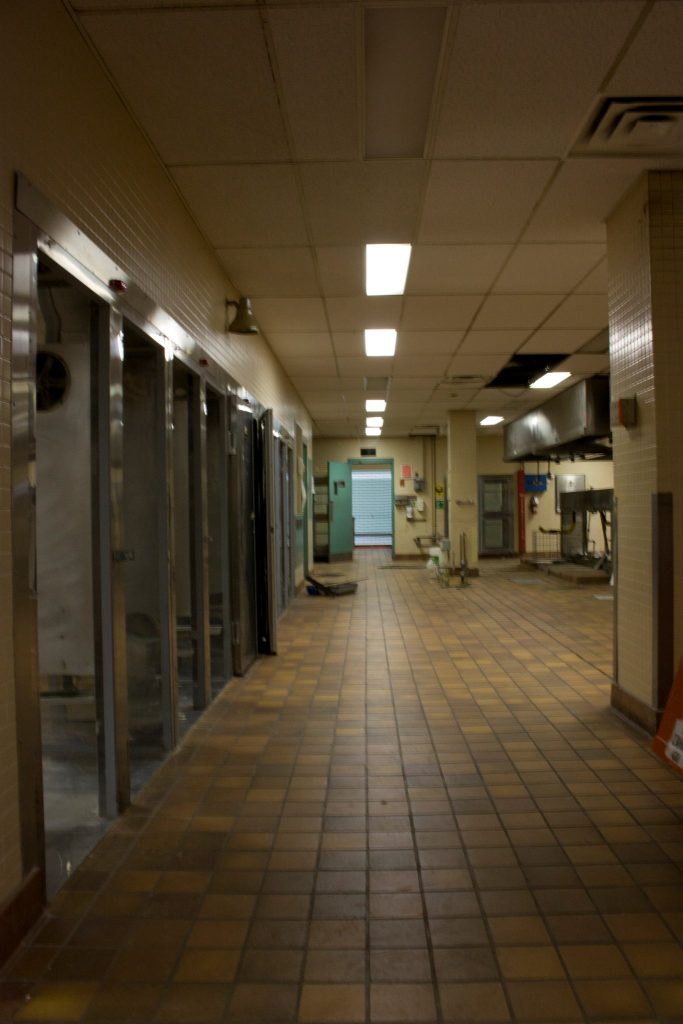
Where was the hospital located?

Sudbury General Hospital was located at 700 Paris Street next to Bell Park.

Who owns the property where the Sudbury General Hospital was located?

Panoramic Properties


Chedoke Hospital in Hamilton, Ontario

The Chedoke Hospital in Hamilton started as a sanitarium for tuberculosis patients in 1906. It began as a two tent operation located on a farm where eight patients were able to be treated. 

When antibiotics were discovered by Albert Schatz in 1943, the need for long stays in sanitariums was no longer required. To remain operational the sanitarium began accepting Inuit patients from Northern Canada. From 1958 until 1962, approximately 1,300 patients received treatment at Chedoke.

Life for Inuit patients could often involve feelings of isolation, being confined to a bed, language barriers and some suffered abuse at the hands of staff. 

In time the tents were replaced by cottages which were not well insulated against the winter. The cottages were replaced by brick buildings.

The treatment for TB at the time was rest, fresh air and a good diet.  In 1961, the sanatorium officially became Chedoke General and Children’s Hospital. In 1971 the hospital name was changed to Chedoke Hospital.

The emergency department closed in 1992. The rehabilitation and brain injury services moved out in 2009, followed by the regional joint assessment program which left in 2011. 

There are still several buildings left on the grounds, some of which are partially still in use. There is enough to spend an entire day exploring – if you can get inside. 

There are security cameras on site, and I can vouch for their effectiveness. We were caught within five minutes of being on the property. 

Developers have purchased much of the land and new housing is being constructed. 


Video

Exploring the Abandoned Chedoke Hospital in Hamilton, Ontario


St. Catharines General Hospital and Autopsy Room

History of St. Catharine’s General Hospital

St. Catharine’s first hospital was founded by Dr. Theophilus Mack in 1865. It was built on Cherry Street and contained four beds. The hospital provided medical care for sailors passing through the Welland Canal as well as to the local residents. 

A second hospital, on Hainer Street, opened in the spring of 1867 and was three times larger with twelve beds. 

In March of 1870 the board agreed to purchase the Winsor Chase house on Queenston Street. The house was remodelled to create room for sixteen beds. It opened in September of the same year. The last official address was 142 Queenston Street.
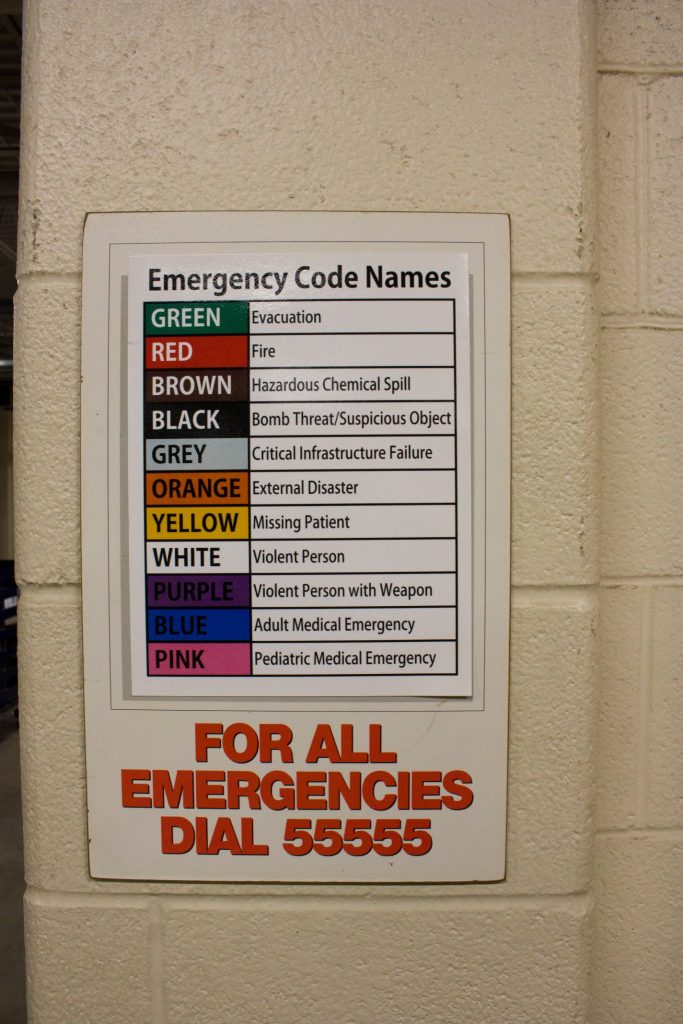
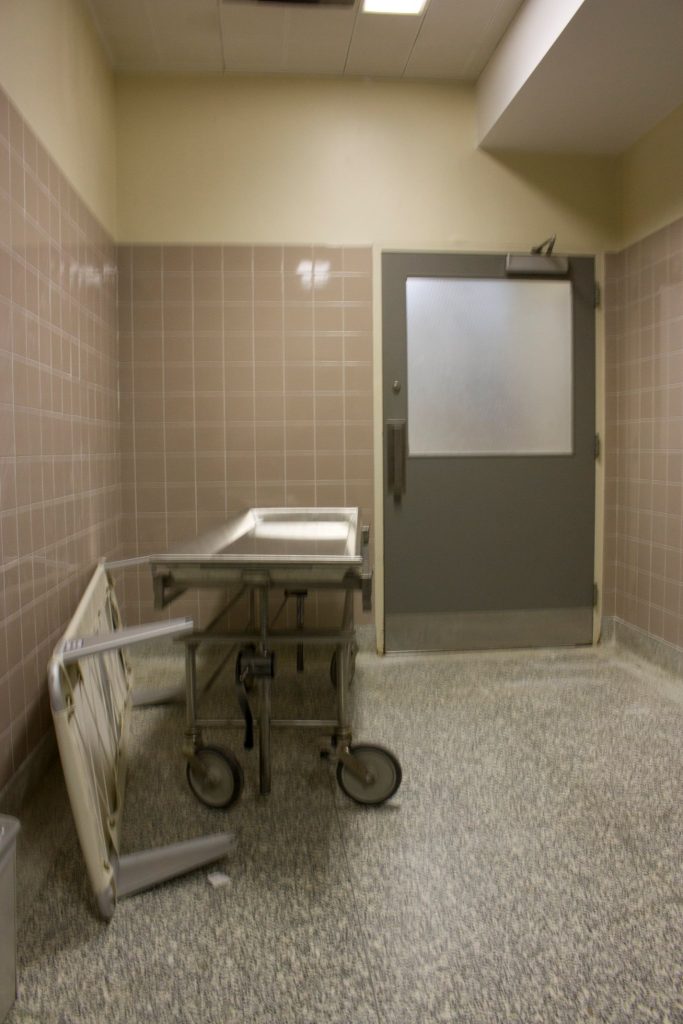
In 1924 the hospital’s name was changed to St. Catharines General Hospital. 
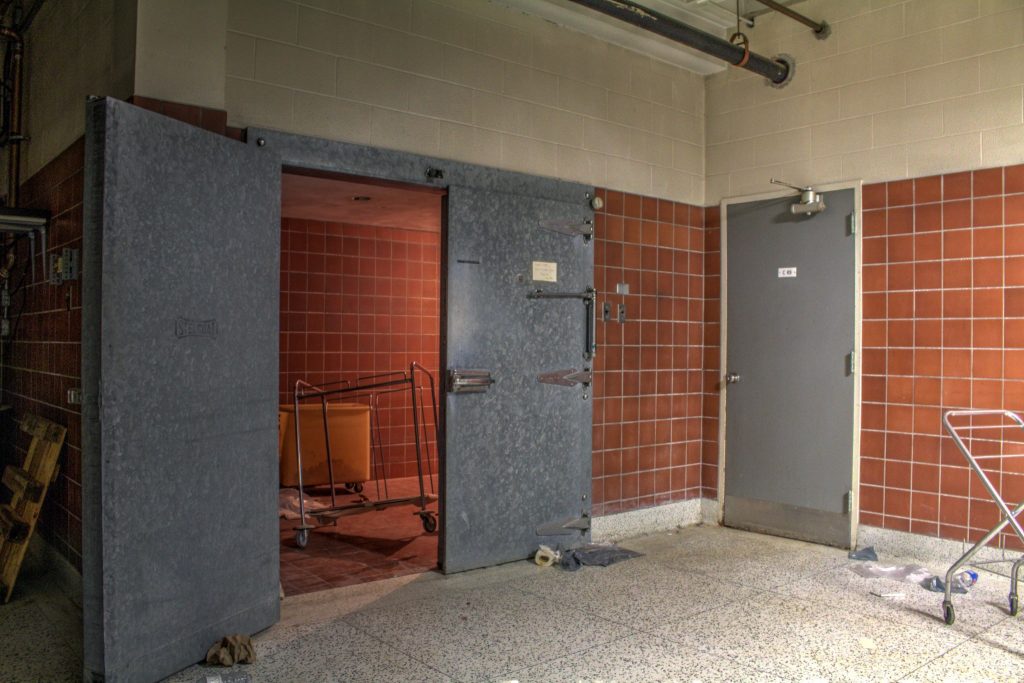
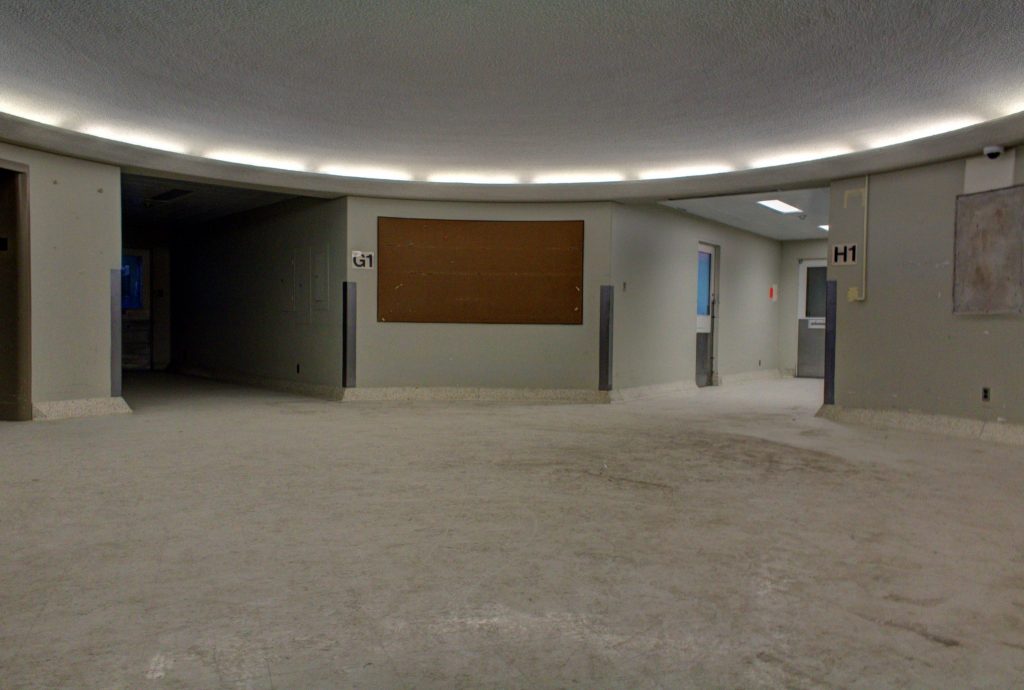
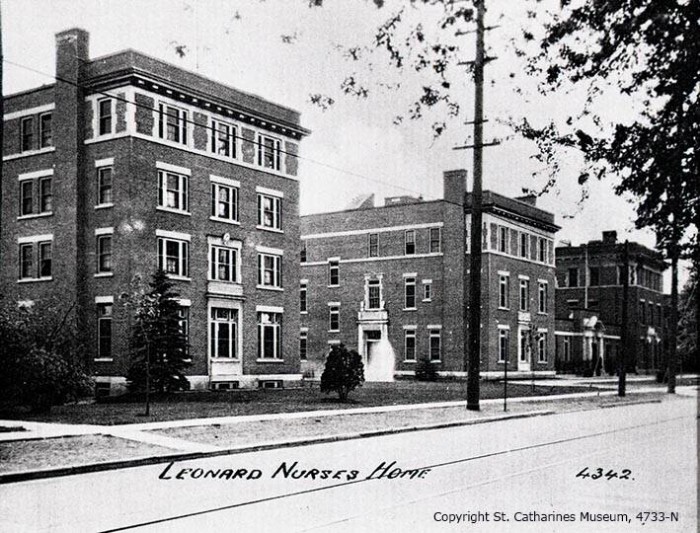
The Leonard Nurses Home, a residence for nurses, was built to the east of the hospital. There was room left between the two buildings to add on a wing at a later date. The residence was named after Colonel Reuben Leonard, a board member who financed the construction.

Leonard Home for Nurses - St. Catharines
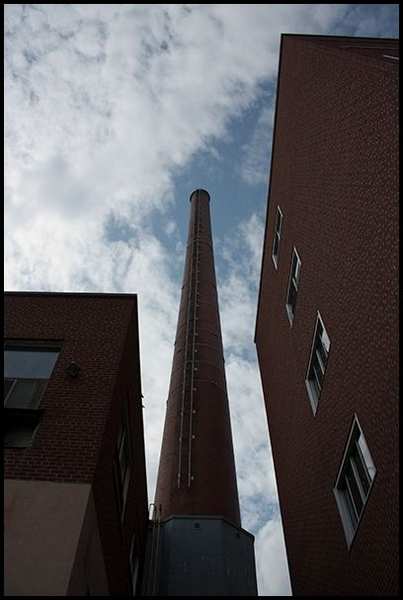
Leonard Home for Nurses – St. Catharines
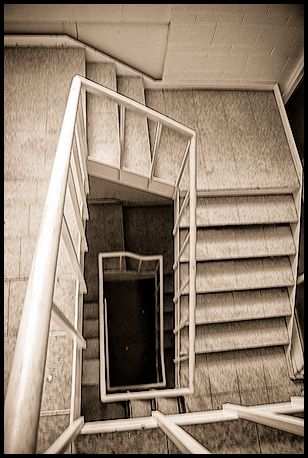
The top two floors were demolished in 1972 and the second floor joined to the Moore Wing of the hospital. 

St. Catharines General Hospital in Ontario, St. Catharines, urban exploration photography, urban explorer, urban exploring, creepy, decay, abandoned, abandoned Ontario, abandoned exploring, abandoned houses, time capsule, abandoned photography, abandoned places

The St. Catharines General Hospital closed on March 24, 2013 at 6 a.m. when services were moved to the new facility on Fourth Avenue. 

Panoramic Properties

A year earlier, Panoramic Properties Inc. agreed to purchase the property to be used as multi-unit residences while preserving some of the building’s historic features.  Local residents and businesses became tired of looking at the dilapidated structure as it sat idle until 2017. In 2017 a new owner, Queenston Oakdale Limited took over. Panoramic hasn’t disclosed why they didn’t proceed with the project.

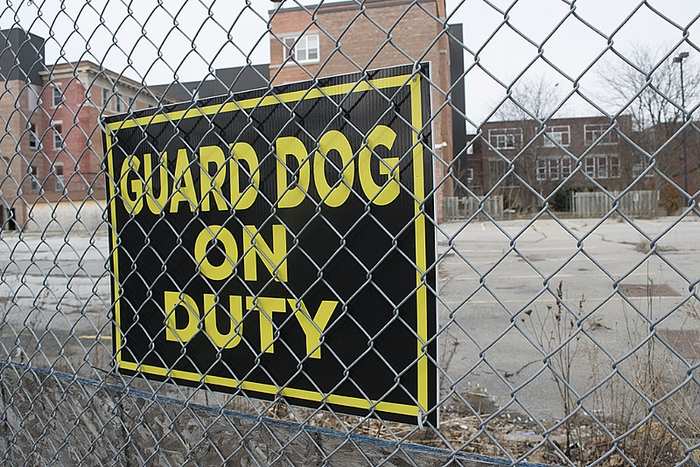
Attempts were made to keep trespassers out from the property. This included German Shepherd guard dogs which were housed inside the hospital. While I explored this location, I came across the sleeping area for the dogs. Other explorers reported finding dog feces in the hallways. This seemed like a large liability to me if anyone were to be attacked by the dogs.

beware of dog sign - St. Catharines Hospital, St. Catharines General Hospital in Ontario, St. Catharines, urban exploration photography, urban explorer, urban exploring, creepy, decay, abandoned, abandoned Ontario, abandoned exploring, abandoned houses, time capsule, abandoned photography, abandoned places
Beware of dog sign

The dogs were removed some time in 2017. I’ve often wondered, how guard dogs can be vicious yet welcoming to the people who care for the property. 

Cameras were installed, windows boarded and doors welded. The rear of the hospital was out of the public eye which allowed people to attempt to make entry. On my visit, an exterior door was off the hinges and laying on the ground. 

A news article reported that the fence had been cut at least “100 times” by people looking to gain entry. 

Demolition

In December 2018 Starnino Environmental Recovery was hired to commence demolition. Equipment arrived on site December 1, 2018 ready to demolish the property. Demolition was delayed as the property had to be searched for any squatters inside. 

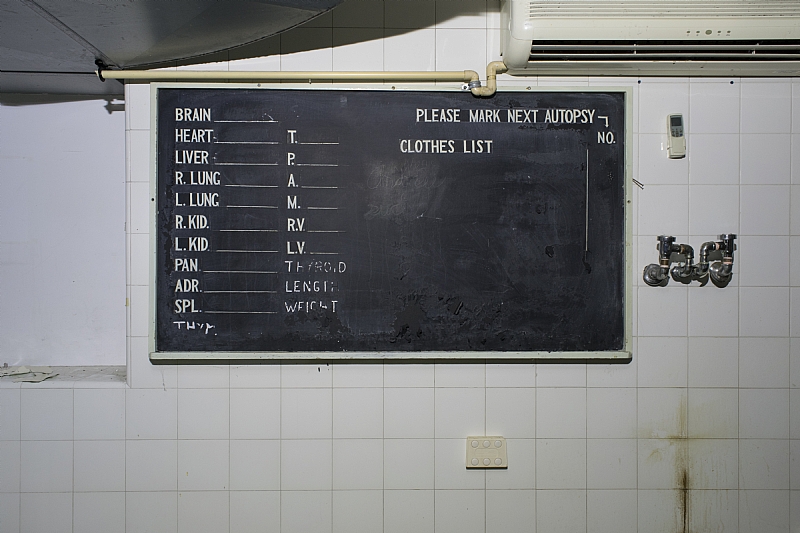
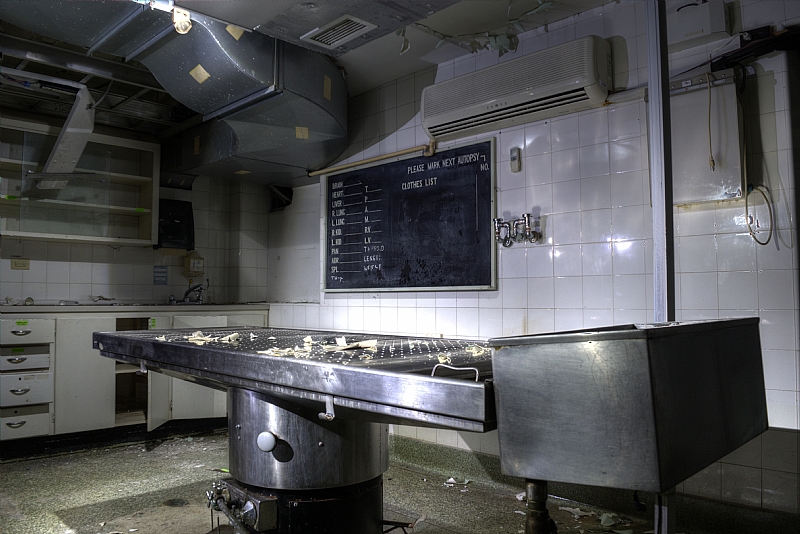
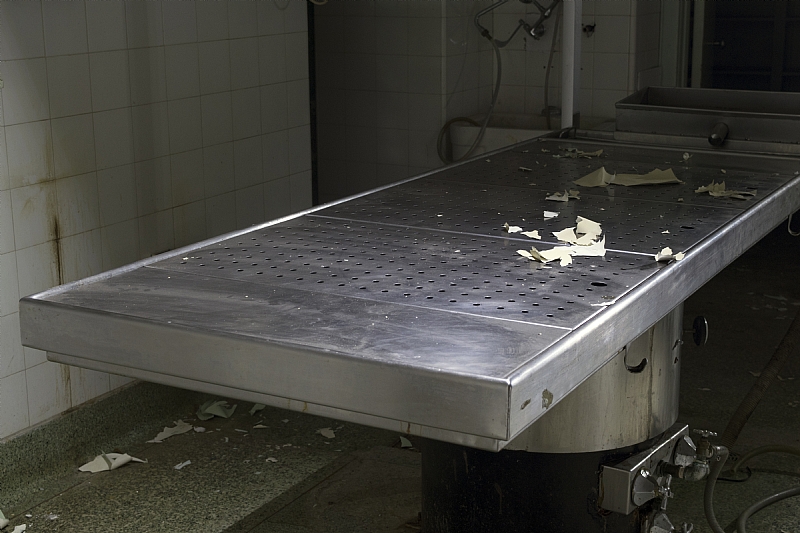
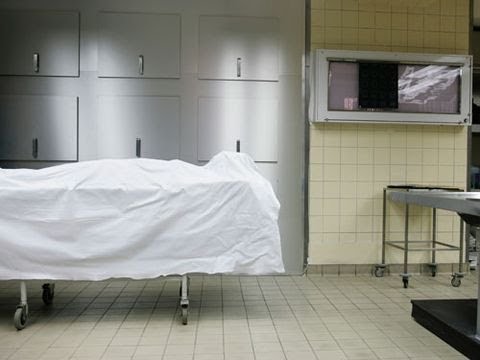
One of the first areas I explored was the morgue – a must see. I’m not quite sure what the fascination is with morgues, perhaps it’s because it’s an area of any hospital that’s kept out of view of the public. It represents the end of life cycle, unlike the nursery where the public can view the beginning of life. 

autopsy room chaulk board - St. Catharines General Hospital
A chaulk board with areas for brain, heart, liver, lungs, kidneys, etc. 
autopsy room in abandoned St. Catharines Hospital
Autopsy room
autopsy table in abandoned Ontario St. Catherine's Hospital


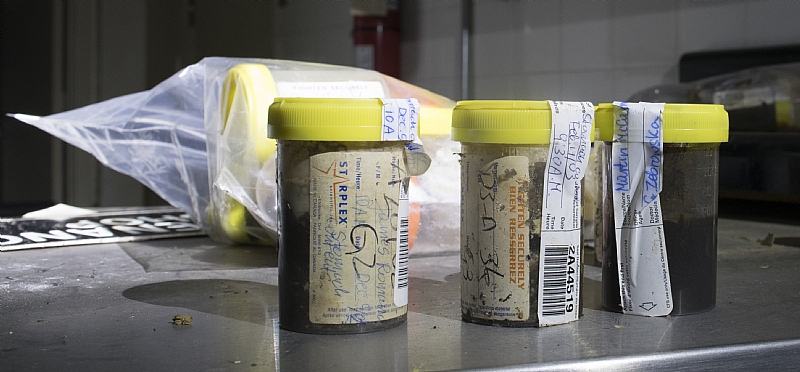
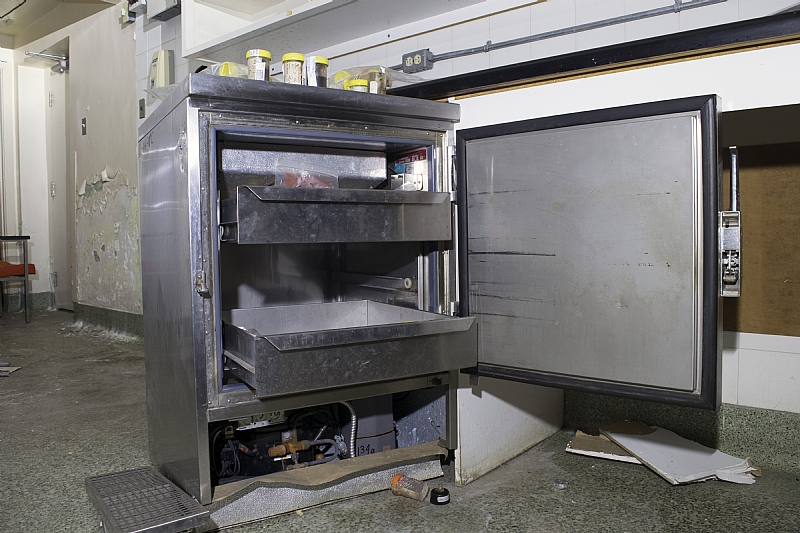
There was a fridge unit with samples of human tissue, and patient names on them. I’m not showing the names however I’m quite certain this was a privacy issue.

human tissue samples in autopsy room
Human samples in autopsy room
Photo of St Catharines General Hospital

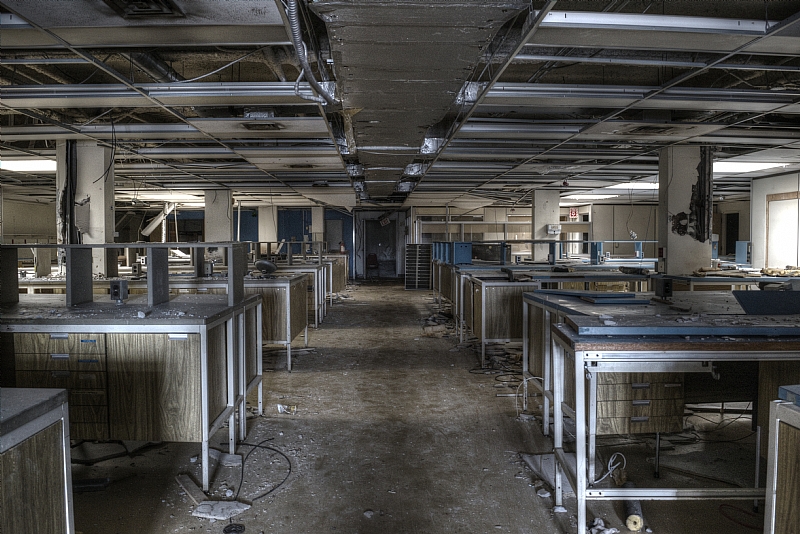
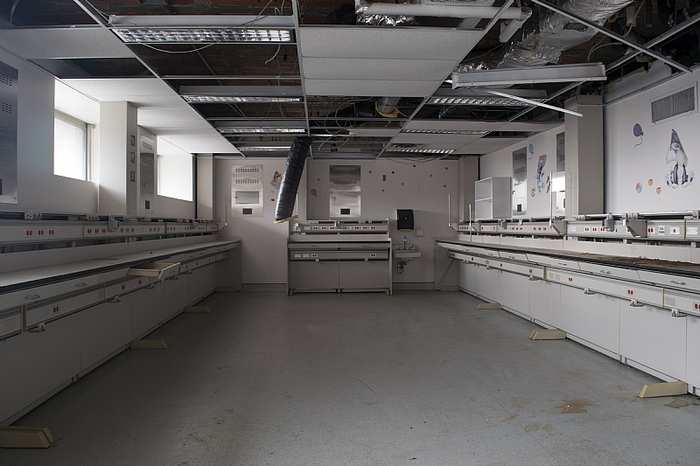
This room looked to be a laboratory of some sort. There was a board not far from here where explorers signed their names. 

Photo of St Catharines General Hospital
Laboratory room – St. Catharines Hospital

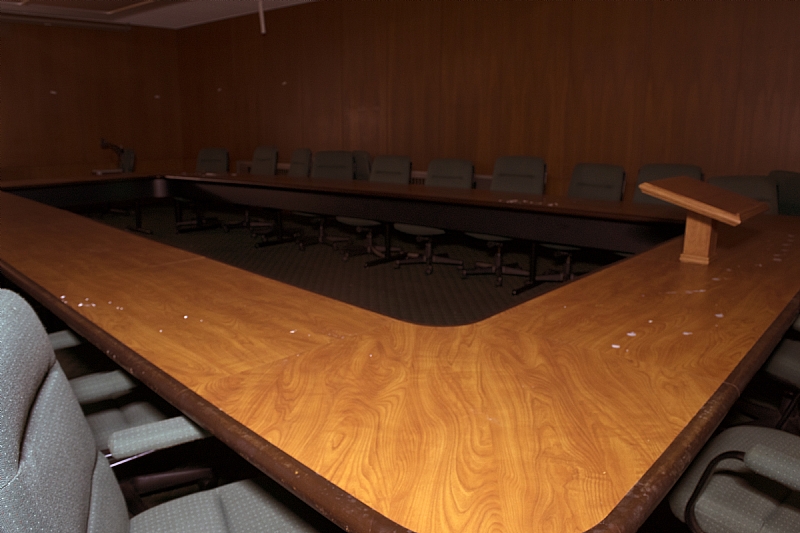
On the main floor down from the reception area was a large board room. I heard stories that kids were later found in here smoking marijuana. It was completely dark in here as there were no windows, and we were very much alone on our visit.

board room - St. Catharine's General Hospital
Board room

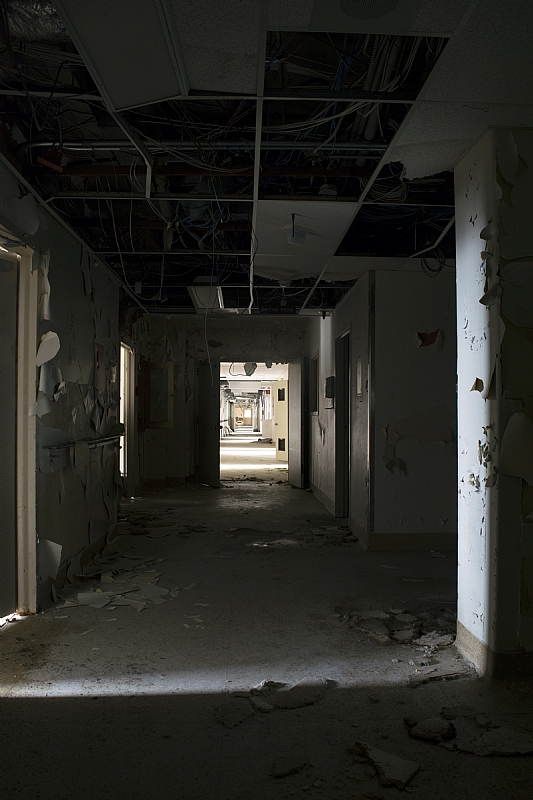
The property has seen it’s share of vandalism both from acts of mischief and scrappers looking for metals.


Photo of St Catharines General Hospital
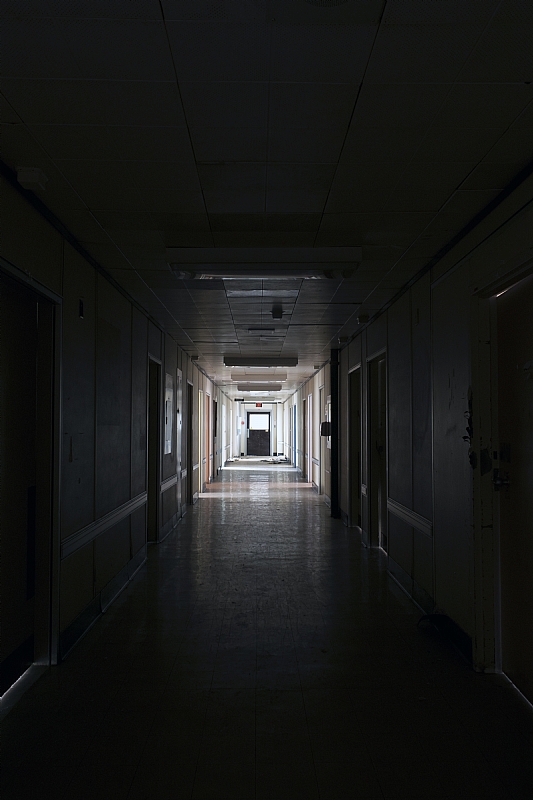
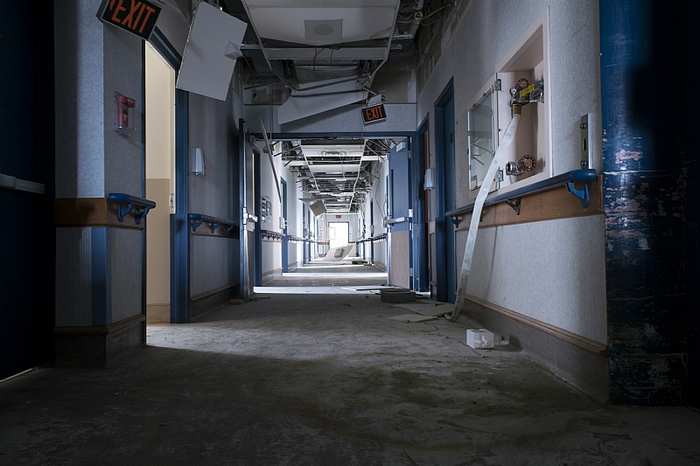
lonely hospital hallway

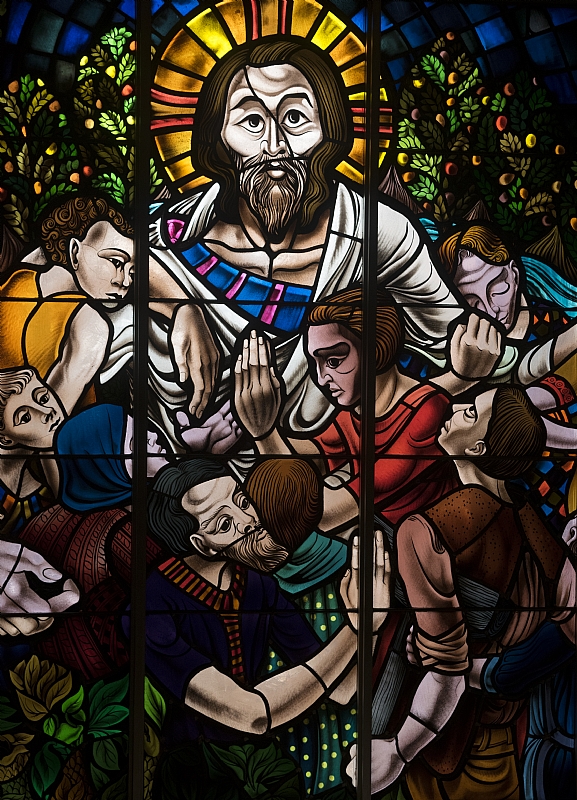
If you’ll excuse the pun, it’s a miracle that this beautiful stained glass window in the chapel survived the years of this hospital being abandoned. Not one broken pane. 

stain glass in hospital chapel of St. Catharines Hospital

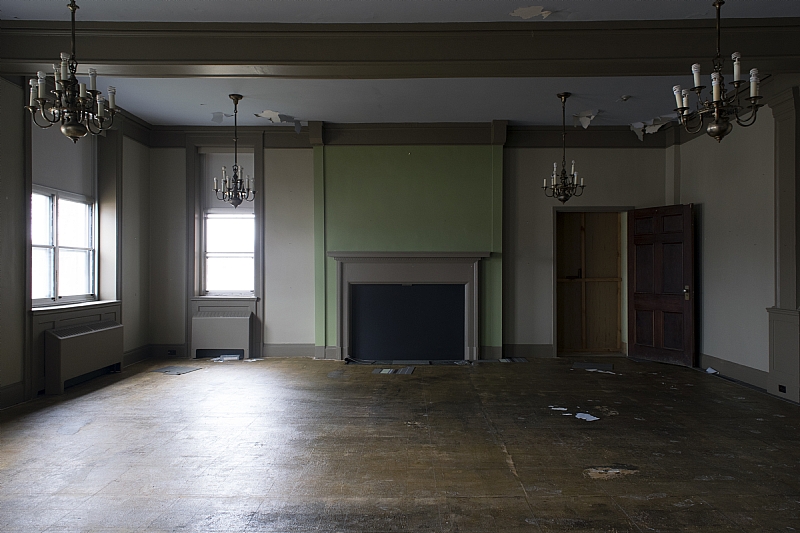
This room retains the look of what the original rooms may have looked like decades ago. The fireplace has been sealed off.

Photo of St Catharines General Hospital

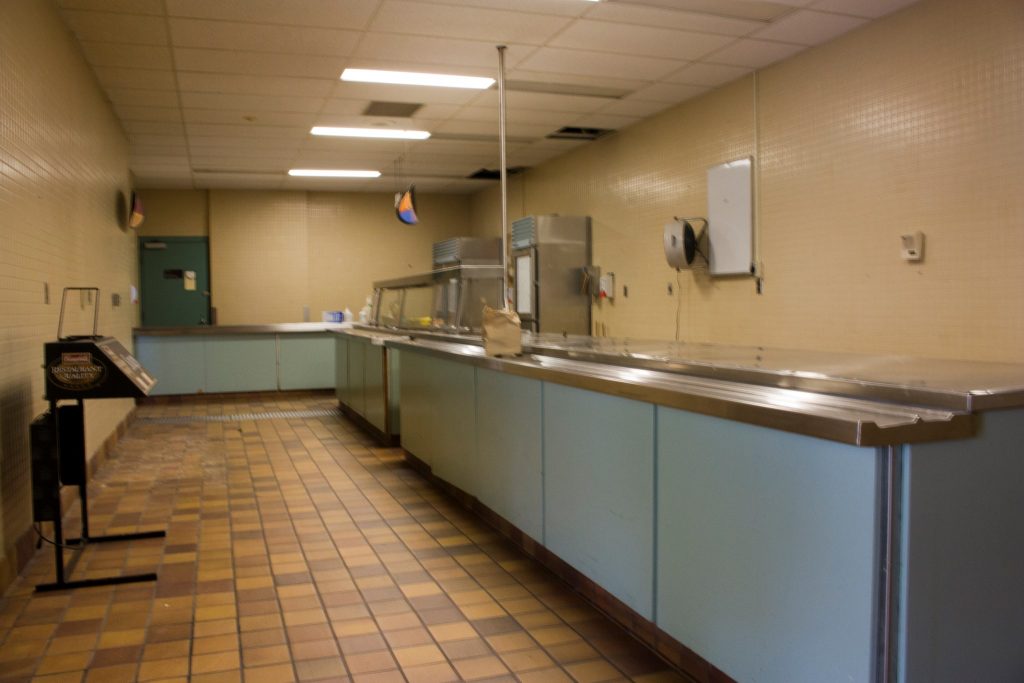
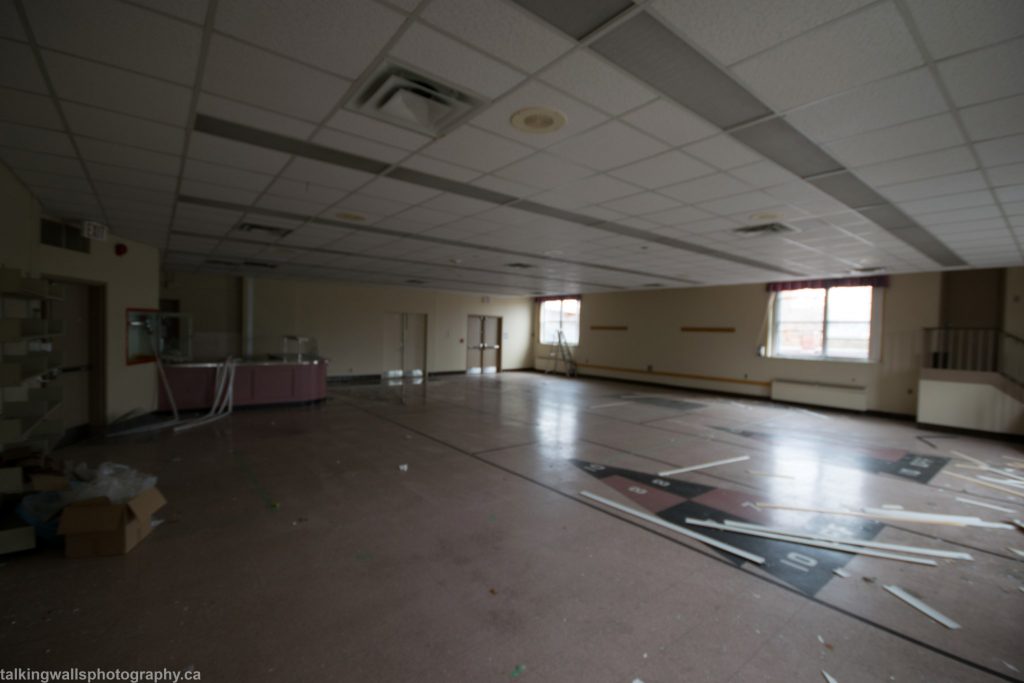
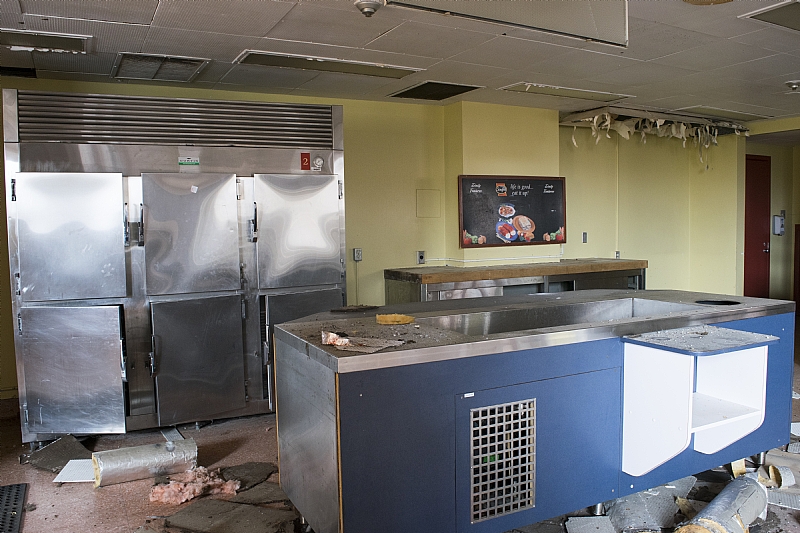
Of course there was the cafeteria to explore 

St. Catharine's General Hospital cafeteria
Hospital cafeteria

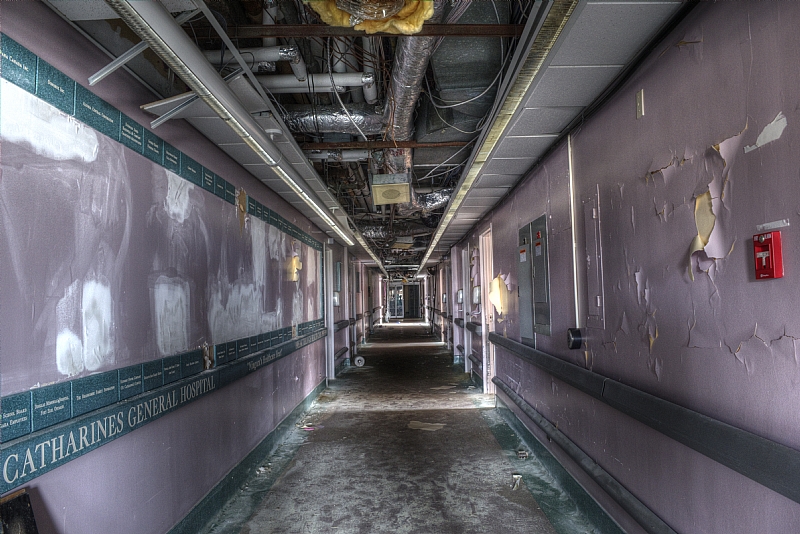
And many hallways with identical looking rooms 

hospital hallway with purple walls
Soothing purple walls
examination room of the St. Catharines General Hospital
Examination room
Photo of St Catharines General Hospital

examination room

This could very well be the wing that connected the nurse’s residence. I don’t remember. 

connecting hallway


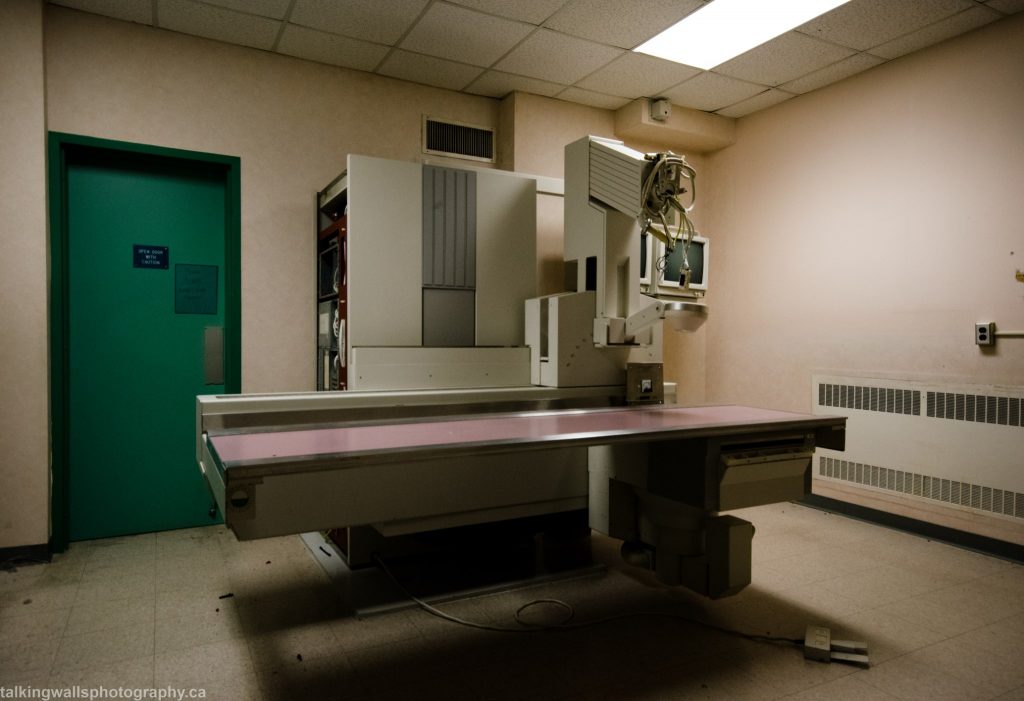
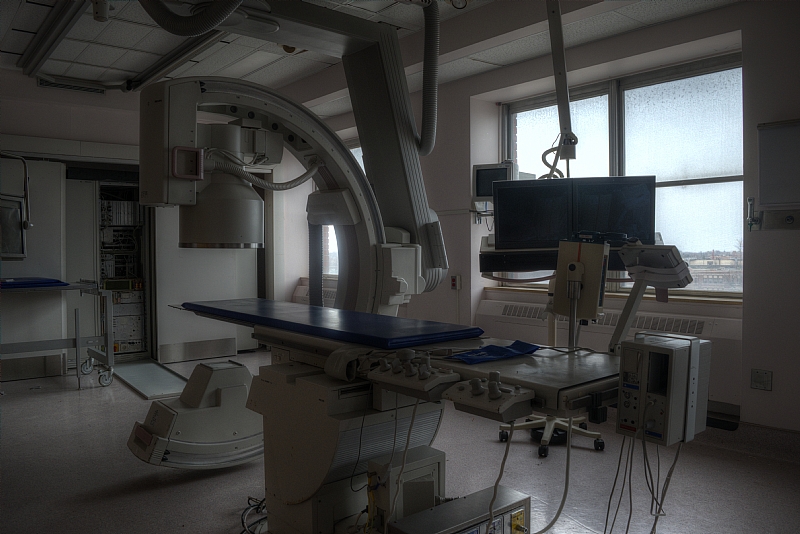
This room had been padlocked until some explorers took it upon themselves to break in. The result was that several photographers were able to take photos like this one, but also allow vandals in. The machines had paint tossed on them some time after my visit. 

x-ray room of St. Catharines General Hospital
imaging room – Note ZERO vandalism
Photo of St Catharines General Hospital

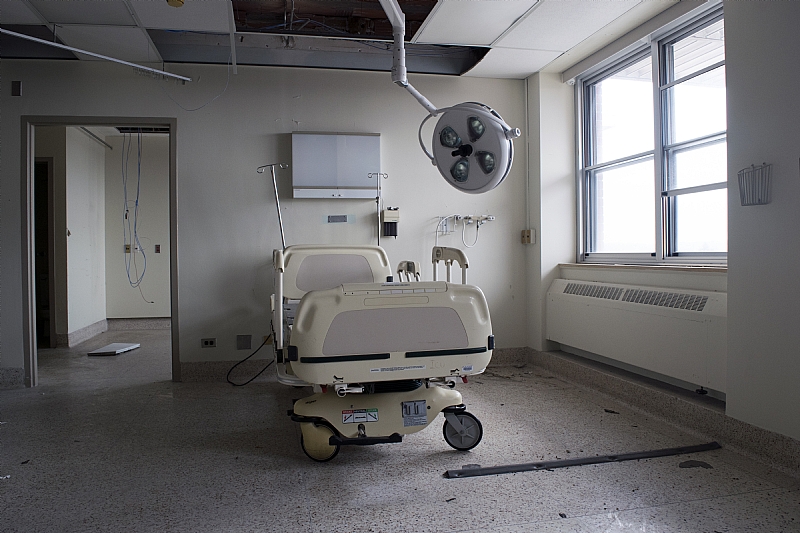
One question that often arises is, why doesn’t this equipment get donated to hospitals that could use it? That’s a very good question. I believe part of the answer is that the equipment becomes obsolete relatively quickly. Could it not be shipped to a needy country? 

lone hospital bed - St. Catharines General Hospital
Hospital bed
Photo of St Catharines General Hospital


In contrast to the morgue where life ends, this is where life begins. The nursery. 

nursery in the St. Catharines General Hospital
Nursery
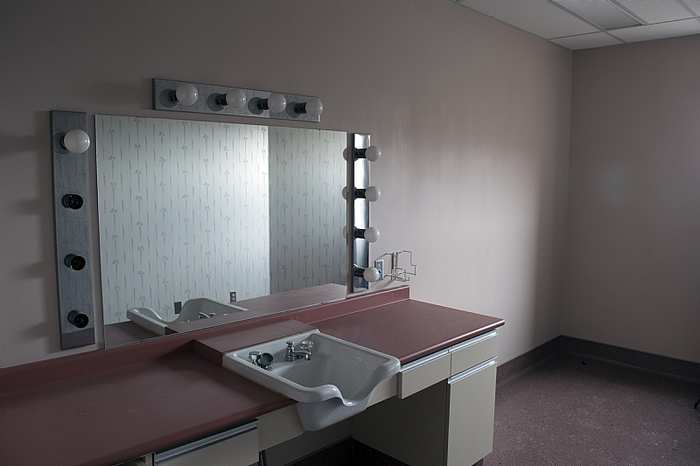
hair salon in St. Catharines General Hospital
Hair salon
hallway


Video

Exploring the Abandoned St  Catharines Hospital. Morgue and tissue samples found inside!